
To remove soap scum from glass and tiles, start with a cleaner approved for the exact surface, gently loosen the film, rinse thoroughly, and dry. Shower glass coatings, glazed tile, grout, and natural stone do not all tolerate the same products. Check those materials before reaching for vinegar or an abrasive paste.
Check the Surface Before Choosing a Cleaner
Look for the shower enclosure’s care instructions and identify the wall material. A stone-look tile may be porcelain or real stone; appearance alone is not enough. If you are unsure, ask the installer or supplier before using a scale remover.
For coated shower glass, follow the coating maker’s guidance. KOHLER specifically advises against abrasive cleaners on CleanCoat glass. A product that works on uncoated glass may be unsuitable for the coating, nearby frame, or seals.
For natural stone, use a compatible stone-care product. The Natural Stone Institute recommends non-acidic soap scum remover for this residue and warns that acidic ingredients such as vinegar can etch or dull acid-sensitive stone. Do not assume a sealer makes marble or limestone acid-proof.
How to Remove Soap Scum from Glass
Prepare the area. Remove bottles and loose items. Ventilate the bathroom and follow the cleaner’s directions for gloves and other precautions. Keep your footing secure and avoid leaning heavily on a glass door.
Test a small area. Check the product label against the enclosure’s instructions, then test an inconspicuous spot. Protect nearby finishes from overspray. Never mix cleaners or add vinegar to a bleach-containing product.
Apply as directed. Use the label’s amount and contact time. Do not let the cleaner dry on the surface unless its instructions specifically say to do so. There is no single soaking time that suits every product and coating.
Wipe gently. Use a clean, soft cloth or a non-scratching tool permitted by the manufacturer. Work a manageable section at a time. Avoid razor blades, steel wool, gritty powders, and improvised abrasive pastes.
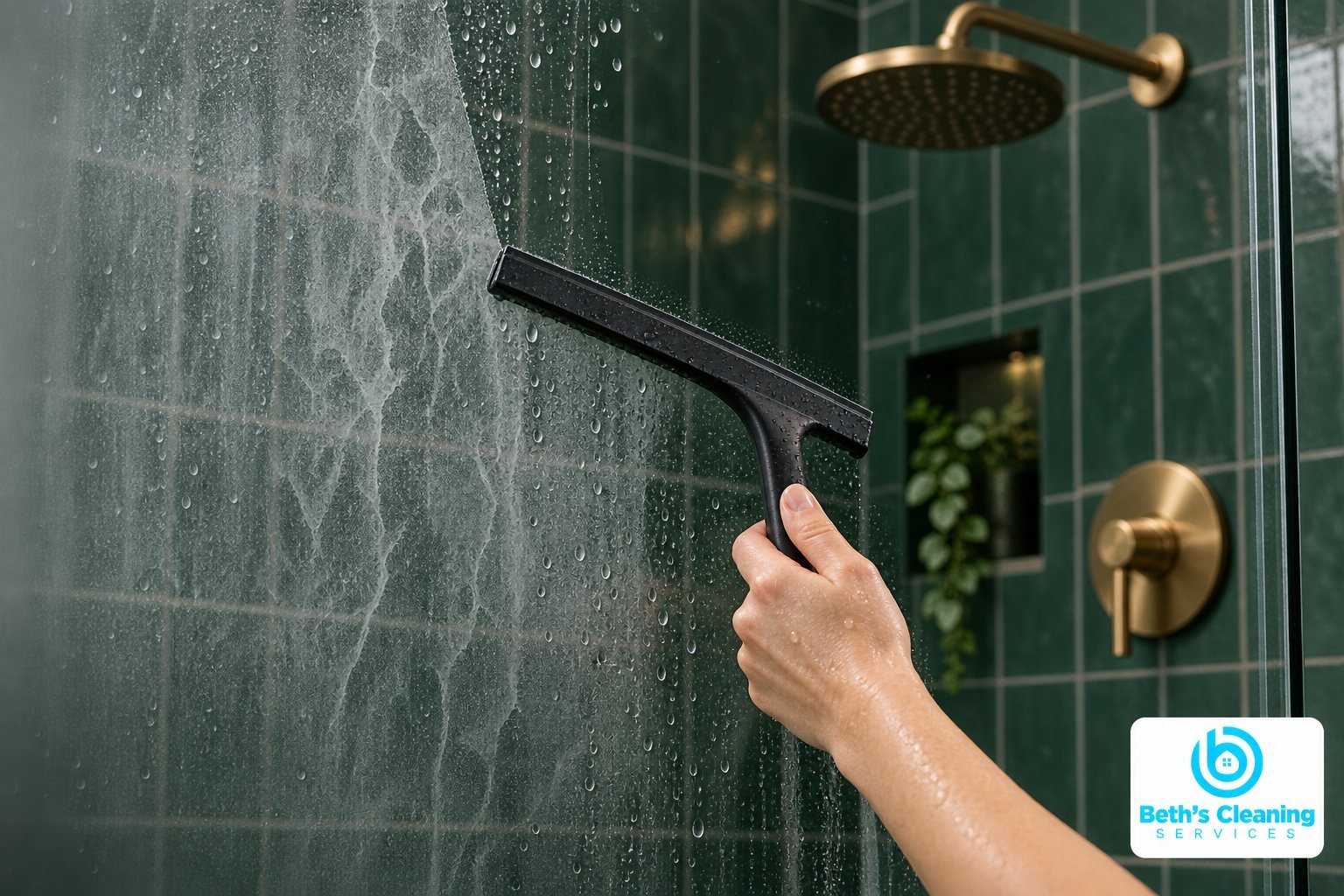
Rinse and inspect. Remove loosened residue and cleaner as directed, then use a clean squeegee on the glass. Dry edges and accessible ledges with a soft cloth. Inspect the dry surface before deciding whether another gentle treatment is needed.
Clean Tile Without Damaging Grout or Trim
Choose a cleaner approved for both the tile finish and the grout. Glazed ceramic or porcelain, decorative metallic tile, and natural stone require different care. Work from the upper wall downward so runoff does not keep dirtying a finished area.
Use gentle pressure around grout joints, caulk, and fixtures. Rinse away the product instead of leaving a film behind. If the grout is crumbling, caulk is separating, or a finish is flaking, stop scrubbing and address the damaged material.
What If the Cloudy Film Remains?
A cloudy shower can have more than one problem. Soap residue, mineral deposits, and surface damage may look similar. Do not keep increasing pressure or stacking stronger products when a compatible cleaner has not helped.
Ask the glass or tile supplier about the next suitable treatment. Permanent etching or scratches need assessment, not a promise of restoration through routine cleaning. Avoid applying a new glass sealant unless the enclosure manufacturer confirms compatibility and preparation requirements.
Reduce Buildup Between Cleanings
After showering, rinse visible soap residue and squeegee the glass. Keep the blade clean so it does not drag grit across the surface. Dry accessible ledges where water collects and use the bathroom’s ventilation as intended.
This routine reduces what dries on the enclosure, but it does not eliminate periodic cleaning. Set the frequency according to actual use and buildup, and keep the approved cleaner’s instructions handy.
Frequently Asked Questions
Can I use vinegar on every shower? No. Stone, coatings, grout, and nearby metal finishes may limit what is safe. Check all affected materials, including surfaces that will receive runoff.
Does a squeegee remove old soap scum? It removes water after rinsing and helps limit new deposits. Established film generally needs a compatible cleaning step first.
Can Beth’s Cleaning Services help? Explore our regular home cleaning service for Peabody and surrounding service areas, and confirm the bathroom tasks and surface requirements when requesting a quote.
Care references: Natural Stone Institute stone care and KOHLER CleanCoat glass guidance.

Follow us for more cleaning tips and inspiration!
📸 @beths_services on Instagram | 👍 BethCleaningServices on Facebook