
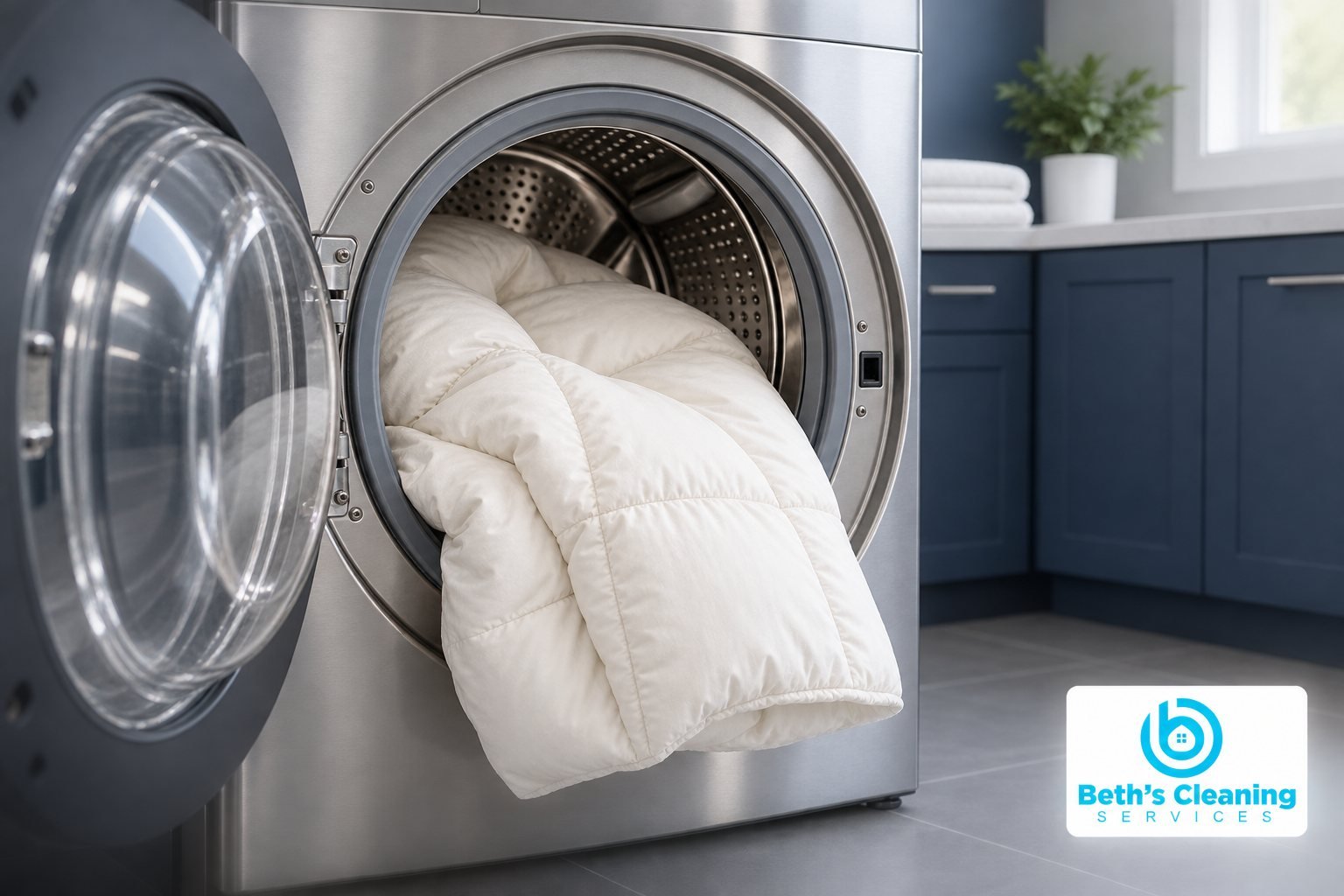
You can clean a duvet or comforter at home when its care label permits washing and your washer and dryer can handle its bulk. Check those three things before getting the bedding wet. A washable cover does not prove the insert is washable, and a comforter that fits through the washer door may still be too tightly packed to clean properly.
Read the Cover and Insert Labels Separately
Remove a detachable duvet cover and follow its own instructions. Check the insert or comforter for its filling, permitted cleaning method, and drying limits. Down, synthetic fill, wool, and decorative shells can require different care; do not transfer instructions from one item to another.
Inspect the seams and fabric for damage. Repair loose stitching before washing if appropriate, or ask a bedding-care professional about a fragile item. If the label requires professional cleaning, do not substitute a home wash because the bedding looks sturdy.
Make Sure the Machines Have Enough Room
Consult the appliance manual for bulky bedding and load limits. The comforter needs space to move in the washer and tumble in the dryer. There is no single drum size that suits every king-size comforter: thickness and filling matter as well as dimensions.
If your equipment is too small, use appropriately sized laundry equipment or a professional service that follows the item’s label. Check drying capacity before washing, so you do not finish with a wet comforter and nowhere suitable to dry it.
How to Clean a Duvet or Comforter at Home
Prepare stains carefully. Use a laundry pretreatment only if compatible with the shell and filling, and follow its directions. Test an inconspicuous area. Avoid pouring concentrated cleaner into the filling or using household surface sprays on bedding.
Load without compressing. Remove the cover and place the washable item in the machine as its manual directs. Do not add other bulky bedding just to fill the load. If the door must be forced shut, stop and reassess capacity.
Select the right wash. Use the label’s temperature and the appliance’s suitable bedding or gentle cycle. Measure a compatible detergent as directed. Do not assume that every down or wool item needs the same detergent or washing conditions.
Check the rinse. Follow the selected cycle and inspect for leftover suds or residue. An extra rinse may be appropriate where the care instructions allow it. If the washer becomes unbalanced, pause and follow its guidance rather than continuing a noisy spin.
Dry the Filling, Not Just the Outer Fabric
Use tumble drying only if permitted. Follow both the bedding label and dryer instructions for temperature, load size, and any drying accessories. Dryer balls are optional tools for compatible items, not a universal requirement or a substitute for enough tumbling room.
During permitted tumble drying, check the item and redistribute it as directed so folded sections do not stay wet. Inspect the center, corners, and stitched compartments after the shell feels dry. Do not increase heat beyond the label’s limit to finish faster.
If air drying is specified, use the recommended support and allow airflow around the bedding. Plan enough time for the filling to dry fully. Never put a damp duvet into a cover, storage bag, or closet.
When to Stop and Get Help
Persistent dampness, a musty smell, leaking filling, or damaged stitching deserves attention before reuse. Contact the manufacturer or a laundry professional if the item cannot be dried or cleaned according to its instructions. More detergent or fragrance will not fix damaged filling.
Routine washing also cannot guarantee that flattened filling will regain its original loft. A worn comforter may need repair or replacement rather than repeated, increasingly aggressive wash cycles.
Keep Bedding Fresh Between Washes
Use a suitable removable cover and wash it according to its label. Address spills promptly with an approved method, and store the insert only when clean and completely dry. Base the cleaning schedule on its care instructions, use, and condition.
For everyday home cleaning in Peabody and surrounding service areas, explore Beth’s Cleaning Services’ regular cleaning and confirm the tasks included. Ask separately about bedding handling rather than assuming laundry or specialty textile care is part of every visit.
Care references: Whirlpool comforter washing guidance, Whirlpool down comforter guidance, and The Company Store care FAQs.

Follow us for more cleaning tips and inspiration!
📸 @beths_services on Instagram | 👍 BethCleaningServices on Facebook