
To clean and store garden tools for winter, separate routine soil removal from rust repair, sharpening, disinfection, and equipment service. Not every tool should be soaked, wire-brushed, or treated with the same chemical. A careful inspection first protects coatings, cutting edges, wooden handles, and moving parts.
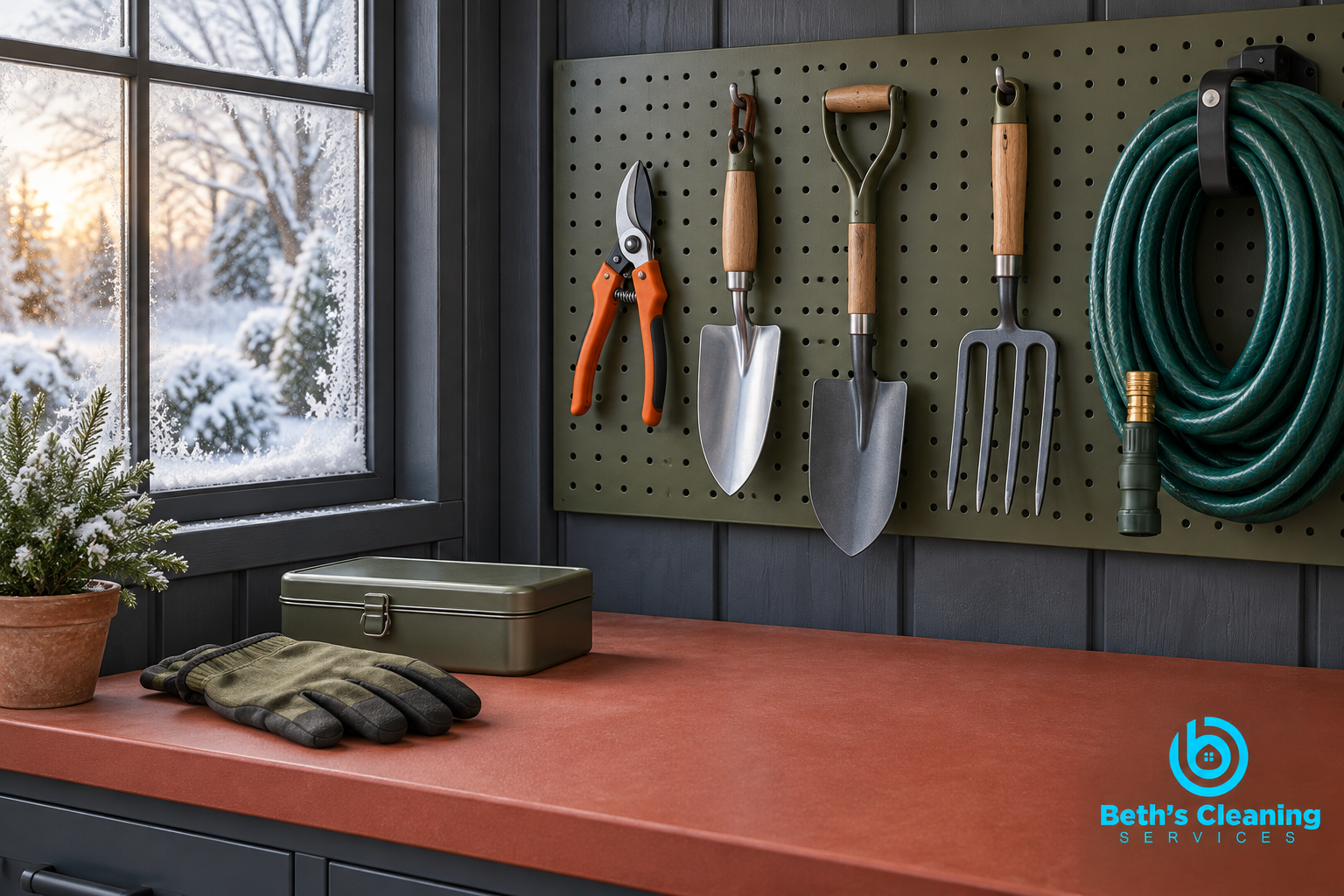
Inspect Before Winter Garden Tool Storage
Lay out hand tools in good light. Check for loose heads, cracked sockets, bent tines, damaged coatings, split handles, missing fasteners, and blades that no longer close correctly. Tag anything that needs a replacement part or professional sharpening. Powered tools, batteries, fuel systems, sprayers, and pressure equipment require their own owner-manual procedures.
Supplies for Hand-Tool Care
- Stiff nylon brush and a plastic scraper
- Mild detergent, warm water, and clean cloths
- Eye protection and gloves appropriate to the product label
- Fine steel wool or a hand wire brush for suitable uncoated steel
- A manufacturer-approved lubricant or light protective oil
- A file or sharpening stone only when you know the blade’s original bevel
- Labels for tools that need repair or replacement
Aggressive abrasives can scratch plated, painted, powder-coated, or nonstick surfaces. Test gently and follow the tool maker’s care directions. Never mix disinfectants or combine them with other cleaners.
1. Remove Soil, Sap, and Plant Debris
Brush away dry soil first, paying attention to joints, sockets, and the backs of blades. A plastic edge can lift compacted dirt without gouging many finishes. For washable hand tools, use mild detergent and water, then rinse as the manufacturer allows. Avoid immersing wooden handles, ratchets, bearings, springs, or tools with electrical components.
Sticky sap may require the product recommended by the pruner or blade maker. Use the smallest amount, keep solvents away from grips and finishes unless approved, and work with ventilation and ignition safety required by the label.
2. Disinfect When Plant-Disease Risk Calls for It
Cleaning and disinfecting are different steps. The University of Minnesota Extension explains that visible soil and debris must be removed first because they interfere with disinfection. Disinfection is especially useful after contact with diseased plants, between susceptible plants, after use at another garden, and before winter storage when disease exposure is a concern.
Choose an effective product for the specific tool and follow its label for protective equipment, wet contact time, rinsing, and drying. Bleach solutions can corrode metal and pit sharp edges; 70% isopropyl alcohol is flammable and is not suitable for every pathogen or material. A generic “diluted disinfectant” is not enough direction. Never pour leftover treatment into the garden.
3. Dry Every Part Thoroughly
Wipe tools immediately and let joints, sockets, and handle ends dry completely in a ventilated place. Open pruners as the manufacturer permits so trapped moisture can escape. Do not store damp tools in sleeves, closed bins, or a humid shed. Drying slows corrosion, but it cannot reverse deep rust or damage already present.
4. Address Rust Without Removing Sound Finish
For light surface rust on compatible bare steel, use fine steel wool or a hand wire brush with eye protection. Work only on the affected metal and wipe away particles. Skip an overnight vinegar soak as a universal method: acid can attack finishes, darken some metals, and encourage new corrosion if residue and moisture remain.
Deep pitting, a loose tool head, a cracked socket, or a blade that no longer aligns can affect safe use. Repair or replace the part instead of polishing over a structural problem.
5. Sharpen Carefully or Use a Professional
Secure the tool and preserve the existing bevel rather than creating a new angle. Wear eye protection and keep hands behind the cutting direction. Pruners, loppers, serrated blades, coated edges, and tools with replaceable blades may need model-specific service. Stop if the blade is cracked, badly nicked, misaligned, or loose.
6. Lubricate Metal and Condition Handles Safely
Apply a thin film of a tool-maker-approved lubricant to clean, dry metal and moving joints, then wipe away excess. The University of Minnesota Extension advises against motor oil because it can transfer to plants. Inspect wood for splinters and cracks before lightly sanding a sound handle. If its finish needs renewal, use a compatible product according to its label.
Linseed oil and similar drying oils create a serious rag-fire hazard. Massachusetts fire-safety guidance warns that oil-soaked applicators can ignite if handled or discarded incorrectly. Plan for approved storage and disposal before opening the product, follow its label and local rules, and never leave oily rags crumpled in a shed, garage, or trash can.
7. Store Tools, Hoses, and Accessories for Winter
- Hang tools on securely anchored supports or place them in a stable rack off a damp floor.
- Keep sharp edges covered or positioned where they cannot be brushed against.
- Drain hoses, disconnect them from outdoor faucets, coil without kinks, and store where the material will not be damaged by freezing conditions.
- Empty and rinse sprayers only as the product and pesticide labels direct; do not pour residues into drains or onto soil.
- Store batteries, chargers, and fuel-powered equipment according to the equipment manual and fire-safety instructions.
- Keep chemicals in original labeled containers away from children, pets, heat, and incompatible products.
A sand-and-oil bucket is not a universal storage solution. Abrasive sand can enter pivots, and oil choice, fire precautions, and disposal still matter. Clean, dry, inspect, and protect each tool according to its materials instead.
Frequently Asked Questions
Should every garden tool be disinfected before storage?
Remove soil and plant debris from every tool. Add an appropriate disinfection step when disease exposure or the plant-health situation warrants it. Match the disinfectant to the pathogen risk, tool material, and label.
Is vinegar safe for removing heavy rust?
Do not assume it is safe for the entire tool. Acids can affect coatings, fasteners, springs, and some metals. Check manufacturer guidance and consider professional restoration or replacement for severe corrosion.
Can Beth’s Cleaning service garden tools?
Beth’s Cleaning Services focuses on home cleaning. Tool sharpening, repair, disinfection for plant disease, oil application, chemical disposal, and outdoor-equipment winterization may fall outside routine service, so confirm the requested scope when you request regular cleaning in Peabody.
Sources and Further Reading
- University of Minnesota Extension: Clean and Disinfect Gardening Tools
- Iowa State University Extension: Prepare Garden Tools for Winter
- Massachusetts: Disposing of Oily Rags

Follow us for more cleaning tips and inspiration!
📸 @beths_services on Instagram | 👍 BethCleaningServices on Facebook