
To clean a wooden cutting board, remove food debris, wash it promptly by hand, rinse, and let every surface dry. Protecting the wood also means using the right care product and replacing a board that can no longer be cleaned well. Lemon and salt may affect odors or stains, but they should not be presented as a reliable sanitizing method.
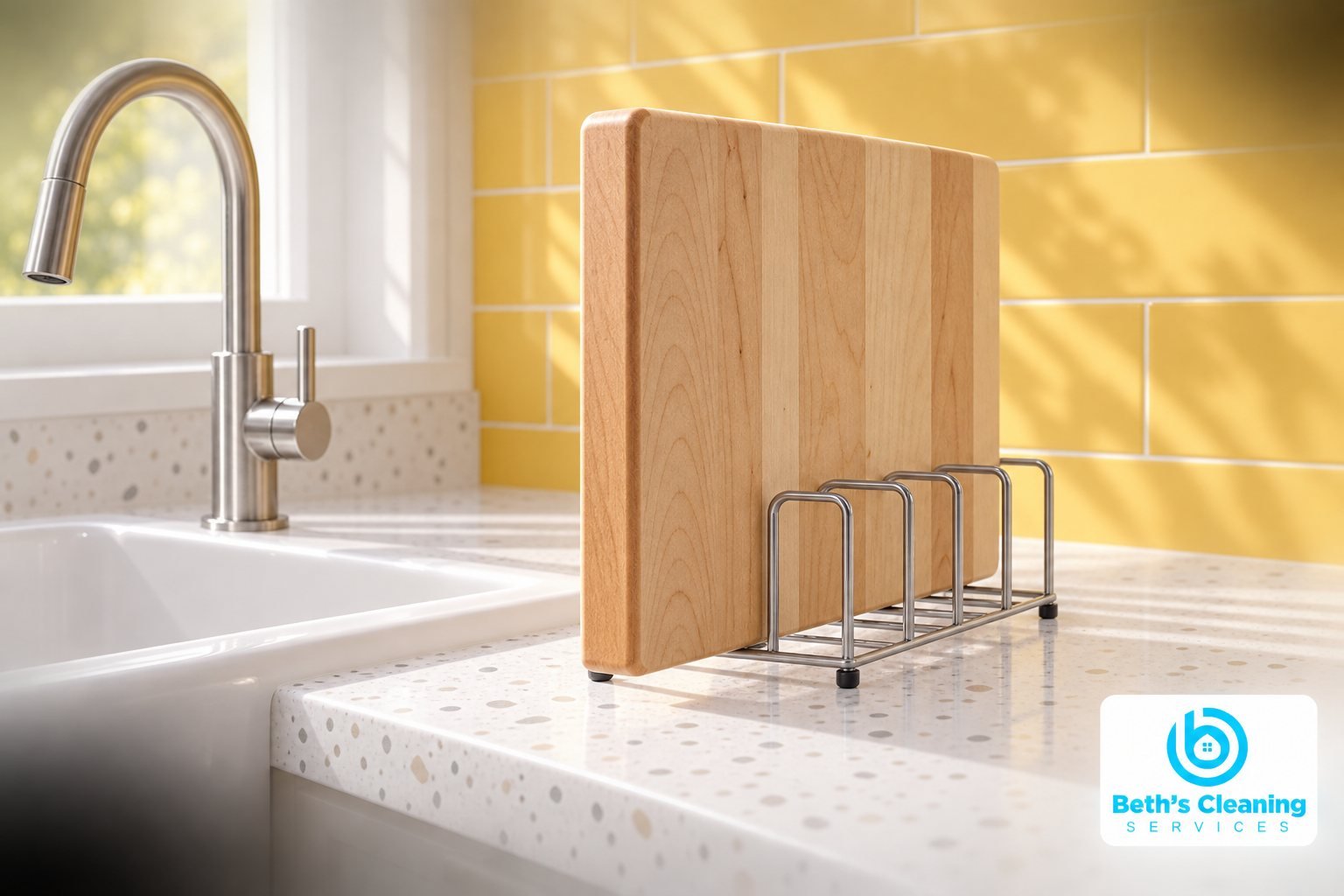
Clean a Wooden Cutting Board After Each Use
Check the maker’s instructions for your board’s construction and finish. Remove loose food first, then wash with hot, soapy water using a suitable clean sponge or brush. Pay attention to juice grooves, edges, and handles where residue can collect. Rinse away food and soap rather than simply wiping them around.
The USDA’s cutting board guidance recommends washing after each use. A board that looks clean after slicing bread still needs care, and a quick wipe is not enough after handling raw meat or poultry.
Do not leave a wooden board submerged in the sink. Avoid a dishwasher unless its manufacturer explicitly permits it; glued wooden boards can be damaged by prolonged moisture and machine washing. Clean the board promptly so food does not dry into the surface.
Separate Cleaning from Sanitizing
Cleaning removes food and grime. Sanitizing is a separate step that reduces microorganisms when the correct product and method are used. Removing an onion smell or a visible stain does not prove a board has been sanitized.
When sanitizing is needed, first wash and rinse the board. Choose a method compatible with the wood and a product labeled for the relevant food-contact surface. Follow its dilution, wet contact time, and rinsing instructions exactly. Do not guess a bleach concentration or substitute scented products. Never mix bleach with vinegar, lemon juice, ammonia, or other cleaners.
Keep a separate board for raw meat, poultry, and seafood, and another for produce or foods that will be eaten without further cooking. Keep used utensils and raw juices away from the clean board. Wash hands and clean the surrounding preparation area before switching tasks.
Dry All Sides Before Storing
Remove surface moisture with a clean towel or paper towel, then allow the board to air-dry fully. For a removable board, a stable rack can keep it on edge with air reaching both faces. Do not balance a heavy board where it could fall or leave one wet face pressed against the counter.
Wait until the board is dry before stacking it, returning it to a closed cabinet, or applying a conditioning product. Repeated damp storage can undermine the care you put into washing it. Keep the drying area clean and away from splashes from raw-food preparation.
Protect the Wood with the Right Oil
Use the board maker’s recommended food-contact-safe oil or board cream. Food-grade mineral oil is appropriate for many unfinished or oil-finished boards, but sealed finishes and specialty products may have different instructions. Cooking oil and furniture polish are not interchangeable with a cutting board care product.
John Boos’ cutting board care instructions call for its specified oil on clean surfaces, time for absorption, and removal of excess. Its schedule depends on use and household conditions. Follow your own board’s directions rather than assuming every board needs the same monthly treatment.
Apply the product only after cleaning and complete drying, cover the surfaces specified by the manufacturer, and wipe away excess after the stated time. A sticky coating is not the goal. Oiling supports wood maintenance; it does not sanitize the board or repair a deep split.
Check for Damage and Persistent Problems
Look for deep grooves, cracks, separated joints, splinters, or a warped surface that makes cutting unstable. Replace a board that cannot be cleaned effectively. Ask the manufacturer before sanding or refinishing; a repair that changes the finish may also change the care requirements.
If odors persist after proper cleaning and drying, inspect the board rather than masking the smell with fragrance. Stop using a board with suspected mold or contamination until you have appropriate advice or replace it. Never serve food on a surface merely because it has been freshly oiled.
For routine household upkeep in Peabody and nearby service areas, explore Beth’s Cleaning Services’ regular cleaning and confirm the kitchen tasks included. Daily food-preparation hygiene and care of specialty boards remain important between cleaning visits.

Follow us for more cleaning tips and inspiration!
📸 @beths_services on Instagram | 👍 BethCleaningServices on Facebook