
To clean a carbon steel wok, let it cool safely, remove food residue with the method recommended by its maker, dry it completely, and leave a very thin protective film of suitable oil. The aim is a clean cooking surface with intact seasoning—not a pan that still holds yesterday’s food or sticky grease.
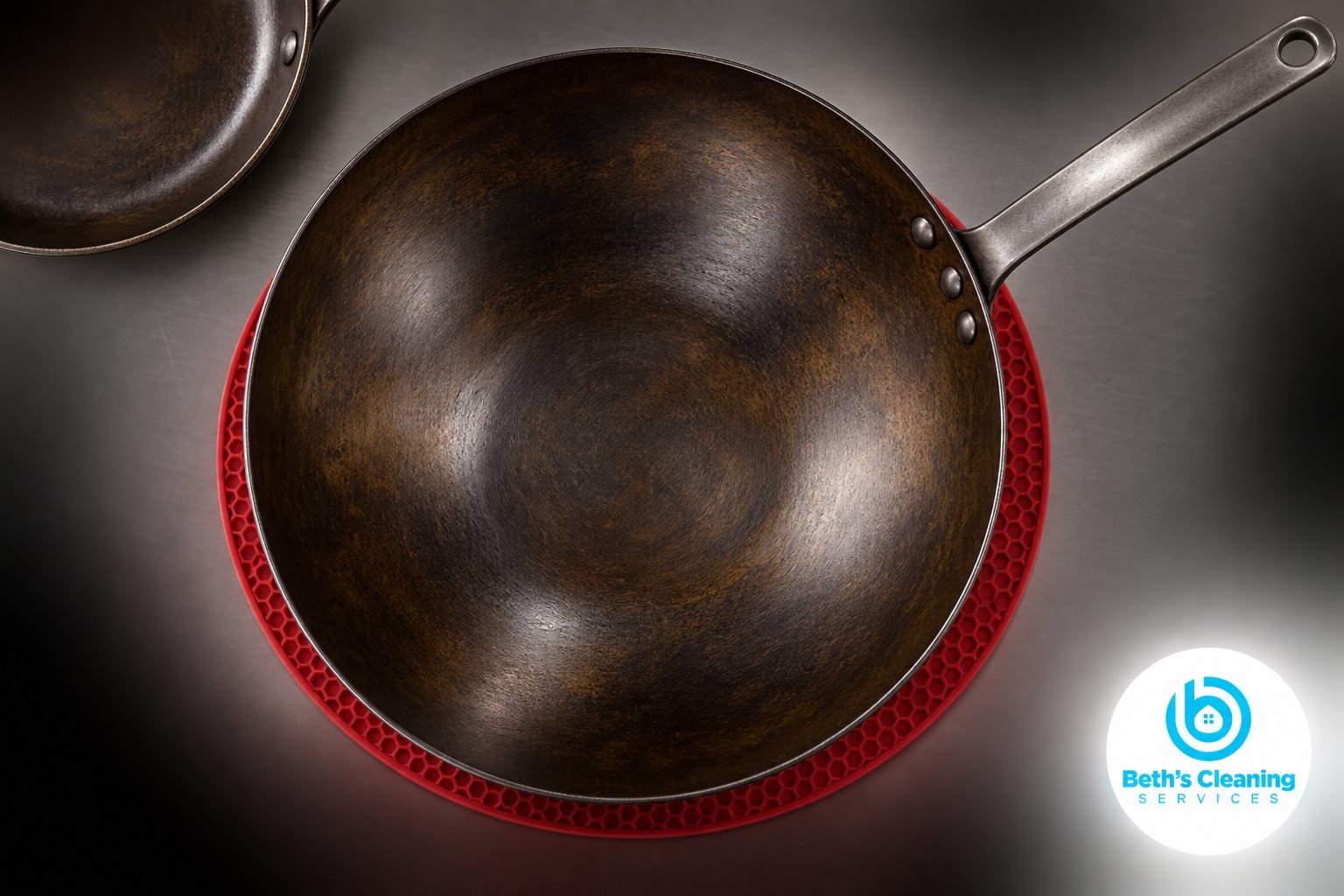
Make Sure the Wok Is Uncoated Carbon Steel
A wok is a shape, not a material. These steps are for seasoned, uncoated carbon steel. Stainless steel, enameled, and factory-coated nonstick woks need their own care instructions. Check the product details before using abrasive tools or following a seasoning routine.
Handles also matter. A wooden grip or other heat-sensitive part may rule out an oven method even when the pan body tolerates high heat. Confirm the manufacturer’s limits for the complete pan, including removable parts, rather than applying a generic temperature.
Clean a Carbon Steel Wok After Cooking
Move food to a serving dish and allow the pan to cool before cleaning. Do not run a very hot wok under a cold faucet. Sudden temperature changes can distort thin cookware, and hot handles can remain hazardous after the burner is off.
Remove loose food and excess grease, then use a compatible brush, sponge, or pan scraper. Work around rivets and the curved sides where residue collects. Avoid soaking the pan or leaving it in a wet sink. Carbon steel should not go in the dishwasher.
Soap advice differs by manufacturer. Lodge’s carbon steel guide permits hand washing with warm, soapy water. Made In’s carbon steel instructions recommend avoiding soap and describe other cleaning methods. Follow the guidance for your cookware; a blanket claim that any soap destroys every seasoned pan is too broad.
Release Stuck Food Without Stripping Everything
Start with the least aggressive method that removes the residue. For compatible pans, briefly simmering water can loosen stuck food so it can be lifted with an approved scraper or spatula. Follow the maker’s procedure and handle the hot water carefully. This is a short cleaning step, not an overnight soak.
Dark, smooth seasoning is different from raised, crusty food deposits. Do not polish the whole pan back to bright metal merely because its color is uneven. At the same time, preserving seasoning is not a reason to leave burnt crumbs or sticky patches behind.
If normal cleaning does not work, consult the manufacturer’s deeper-cleaning or restoration instructions. Avoid improvising with oven cleaner, a dishwasher cycle, or long acid soaks. Those methods can remove seasoning or damage components and are not routine care.
Dry Thoroughly, Then Apply a Thin Oil Film
Dry the washed pan promptly with a clean towel, including the underside and around the handle attachment. If the manufacturer recommends brief stovetop drying, use its specified heat and stay with the pan. Turn the burner off once residual moisture is gone; do not leave an empty pan heating unattended.
When safe to handle, apply a very small amount of the recommended cooking oil and wipe away excess. The surface should not have puddles or a thick sticky layer. Let the pan cool fully before putting it away, and avoid trapping moisture beneath another pan or a tight lid.
This protective oil film is not the same as completing a full seasoning cycle. If seasoning has been stripped, follow the maker’s stovetop or oven procedure, including its ventilation and handle restrictions. Do not guess the temperature or duration.
Recognize Rust and Seasoning Problems
For orange rust, stop and use the manufacturer’s restoration method before cooking again. Cleaning, thorough drying, and reseasoning may be required; rubbing on oil alone does not remove rust. Get advice about deep pitting, a loose handle, or a warped base that no longer sits securely.
Acidic foods can affect seasoning, particularly on a new pan. Use a suitable alternative for prolonged acidic cooking when advised, and transfer leftovers to a storage container rather than leaving them in the wok. Regular cleaning should preserve a usable surface without promises that food will never stick.
For everyday household upkeep in Peabody and surrounding service areas, explore Beth’s Cleaning Services’ regular cleaning and confirm which kitchen tasks are included. Specialty cookware care should always follow the pan maker’s instructions.

Follow us for more cleaning tips and inspiration!
📸 @beths_services on Instagram | 👍 BethCleaningServices on Facebook