
Guest post by Greg L. from Spot Easy.
In Massachusetts, a security deposit can be up to a full month’s rent, so it’s a lot of money to lose over a greasy oven or a few scuffs on the wall. The move-out clean also tends to happen at the worst time, after the boxes are gone and you’re already worn out from the move.
What Your Landlord Can Take From Your Deposit
In Massachusetts, the rules are specific. Under M.G.L. c. 186, § 15B, your landlord generally has 30 days after your tenancy ends to return your security deposit or the balance. The law allows deductions for unpaid rent or water charges that were not validly withheld, certain unpaid real estate tax increases required by a valid lease clause, or a reasonable amount needed to repair damage caused by the tenant or people under the tenant’s control, excluding reasonable wear and tear.
If the landlord keeps money for damage, they must send an itemized list within those 30 days. The list must be sworn to under the pains and penalties of perjury and include written evidence, such as estimates, bills, invoices, or receipts, showing the actual or estimated repair costs.
You don’t have to pay for reasonable wear and tear, such as ordinary fading from normal use. Where dirt ends and damage starts is not always obvious, though. A stove caked in grease or a bathroom with heavy buildup is often where the back-and-forth with a landlord begins, so it’s worth handing the place back clean and well documented.
Start With Your Move-In Paperwork
Before you start cleaning, find the paperwork from when you moved in. When a Massachusetts landlord takes a security deposit, they must give you a signed statement of the apartment’s condition upon receiving the deposit or within 10 days after the tenancy begins, whichever is later. If you disagree with it, you generally have 15 days after receiving it or moving in, whichever is later, to return a corrected copy. The Massachusetts statement-of-condition guidance explains the process.
Under the same law, your landlord cannot deduct for damage that was already listed on that statement unless it was later repaired and the new damage was caused by you or someone under your control. We had a situation where a landlord tried to blame a broken fixture on the tenant, but it was already written down on the move-in condition statement. The landlord had never fixed it, and that form showed the issue was preexisting. Dig up the form and any photos you took on move-in day. They show what was already there and help you focus on the condition you are responsible for.
A Move-Out Clean Isn’t a Regular Clean
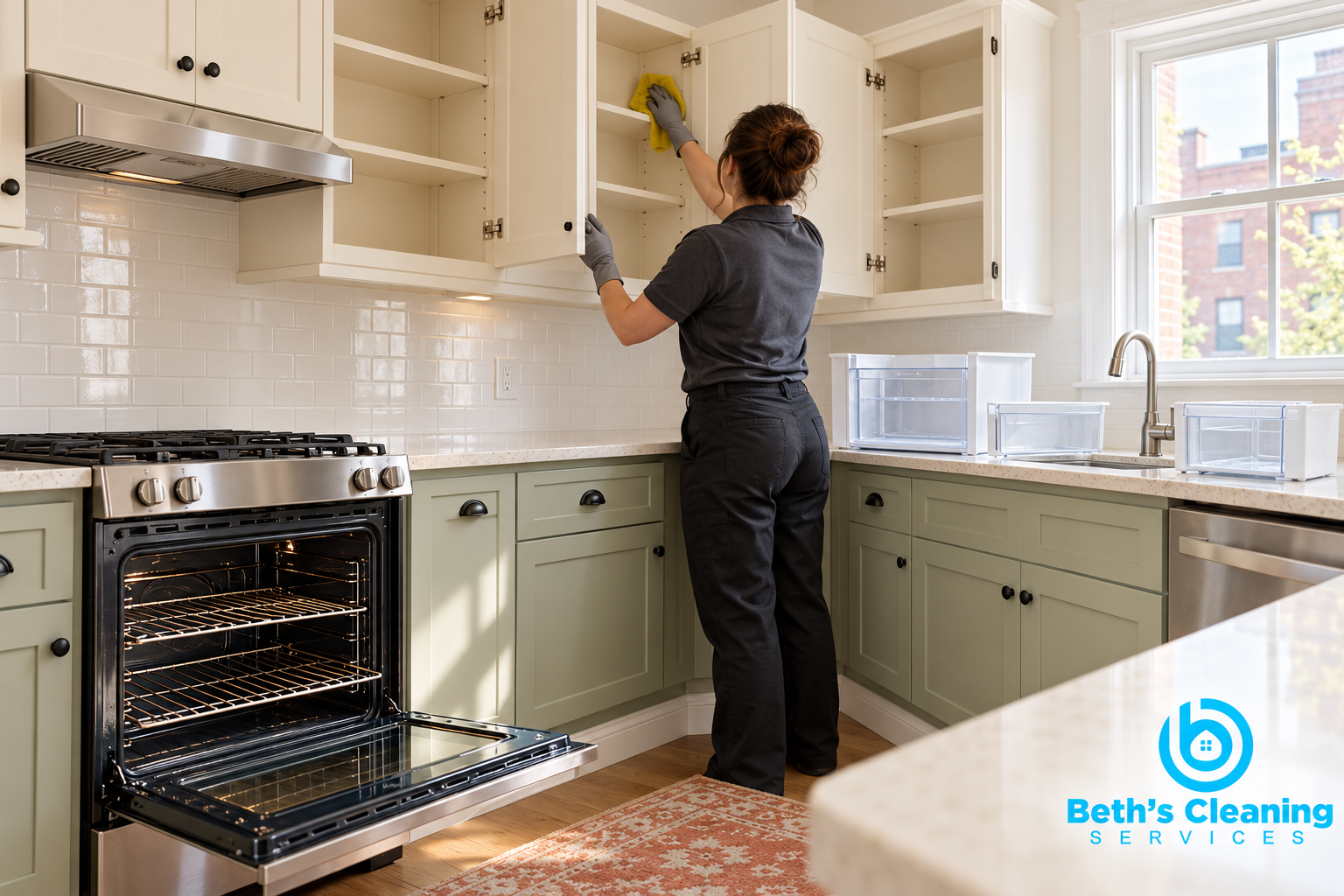
A lot of renters think a move-out clean is the same as their usual cleaning. The team at Beth’s Cleaning says that’s one of the biggest misconceptions they encounter because a move-out clean goes into much more detail. The spots that usually need extra work are the ones a regular clean skips: the inside of cabinets, drawers, the oven and refrigerator, baseboards and door frames, grout, the base of the toilet, and corners.
The big one is anywhere that was hidden behind furniture or appliances. Those areas may not have been cleaned in months or years, and once the apartment is empty, that’s often where a landlord looks too.
The Spots Landlords Check First
When a landlord or property manager walks through an empty apartment, they tend to look at the same places, so that’s where I’d start.
The oven and stovetop are easy to skip because, after a year of cooking, you stop noticing the grease. Pull out the racks, clean the inside, and don’t forget removable drip pans when your appliance has them. If you’d rather stay away from harsh products, here’s how to clean your oven without harsh chemicals.
Empty the refrigerator and freezer completely, take the shelves and drawers out when the manufacturer permits, and wipe everything down. Only unplug it if your landlord tells you to, and if you do, leave the door propped open. This guide to cleaning your refrigerator goes through it step by step.
The inside of cabinets and drawers gets checked too, so wipe every shelf, including crumbs and sticky spots in the back corners. In the bathroom, common trouble spots include soap scum on the tub and shower doors, grout lines, and the base of the toilet.
Scuffs from furniture and marks from tape or hooks are common, but some of that may come off if you clean your walls and remove scuff marks before reaching for paint. Check your lease or ask the property manager before patching or painting. After that, run down the baseboards, since they collect more dust than you’d think.
Don’t skip the windows, either. Dust builds up on sills and blinds, and it’s easy to miss until the apartment is empty.
Leave Time for the Clean
In my experience, most people underestimate how long cleaning takes. The apartment looks fine at first glance, but as you clean, you realize how much more there is to do. That’s why planning to clean after the movers leave on the last day of the lease usually doesn’t work out. By then, you’re tired from packing and planning your move into a new apartment, and the last thing you want is more stress.
Beth’s Cleaning advises scheduling the clean for after the apartment is empty but before the final walkthrough or key handoff. That way, cleaners can reach everything that was behind the couch or under movable appliances, and you can take move-out photos after the clean. Those photos are useful records if the condition is ever questioned.
If you can’t make that work, keep access to the apartment for a day after your belongings are out, or pack in stages so you can clean each room once it’s empty. Many Massachusetts leases turn over on the same day in late summer, so book help early if you’re moving then. Beth’s Cleaning has an ultimate move-out cleaning checklist if you want a full room-by-room list.
When to Hire a Professional
Doing it yourself saves money, but it isn’t always worth it. A professional clean often makes sense for a larger apartment or one you’ve lived in for years, when the oven and bathroom need more than a quick wipe, when your move-out and move-in happen on the same day, or when you’re moving out of state and cannot come back to finish.
Every place is different, but for many move-in and move-out jobs, Beth’s Cleaning quotes around $400 to $650. This is a general range, not a guaranteed price. The final quote depends on the home’s size and condition, the scope of work, access, and any requested extras, such as cleaning inside the oven, refrigerator, cabinets, or windows. Some jobs are quoted hourly instead. A two-bedroom apartment can take several hours depending on its condition and the number of cleaners, which is why a company may need details or photos before estimating the finish time.
A professional move-in or move-out cleaning can cover commonly inspected areas, including the inside of cabinets, refrigerator, oven, and microwave, when those items are included in the agreed scope. If the place needs more than that, a deep cleaning may be appropriate. Keep the receipt with your records because it documents the service performed. A professional cleaning receipt does not guarantee the return of a security deposit, and cleaning cannot remedy preexisting damage or a legal dispute.
Before You Hand Back the Keys
Make sure everything is actually out. Landlords may charge for the reasonable cost of removing belongings left behind when allowed by the lease and applicable law. Once the place is empty and clean, walk through every room and take clear photos and a short video, including the inside of the oven, refrigerator, and cabinets. Preserve the original files so their timestamps and metadata remain available.
Give your landlord your forwarding address in writing so they know where to send the deposit, and put a reminder on your calendar for 30 days after the tenancy ends. Keep copies of the lease, condition statement, photos, cleaning receipt, key-return record, and all written communication.
Moving In? Clean Before You Unpack
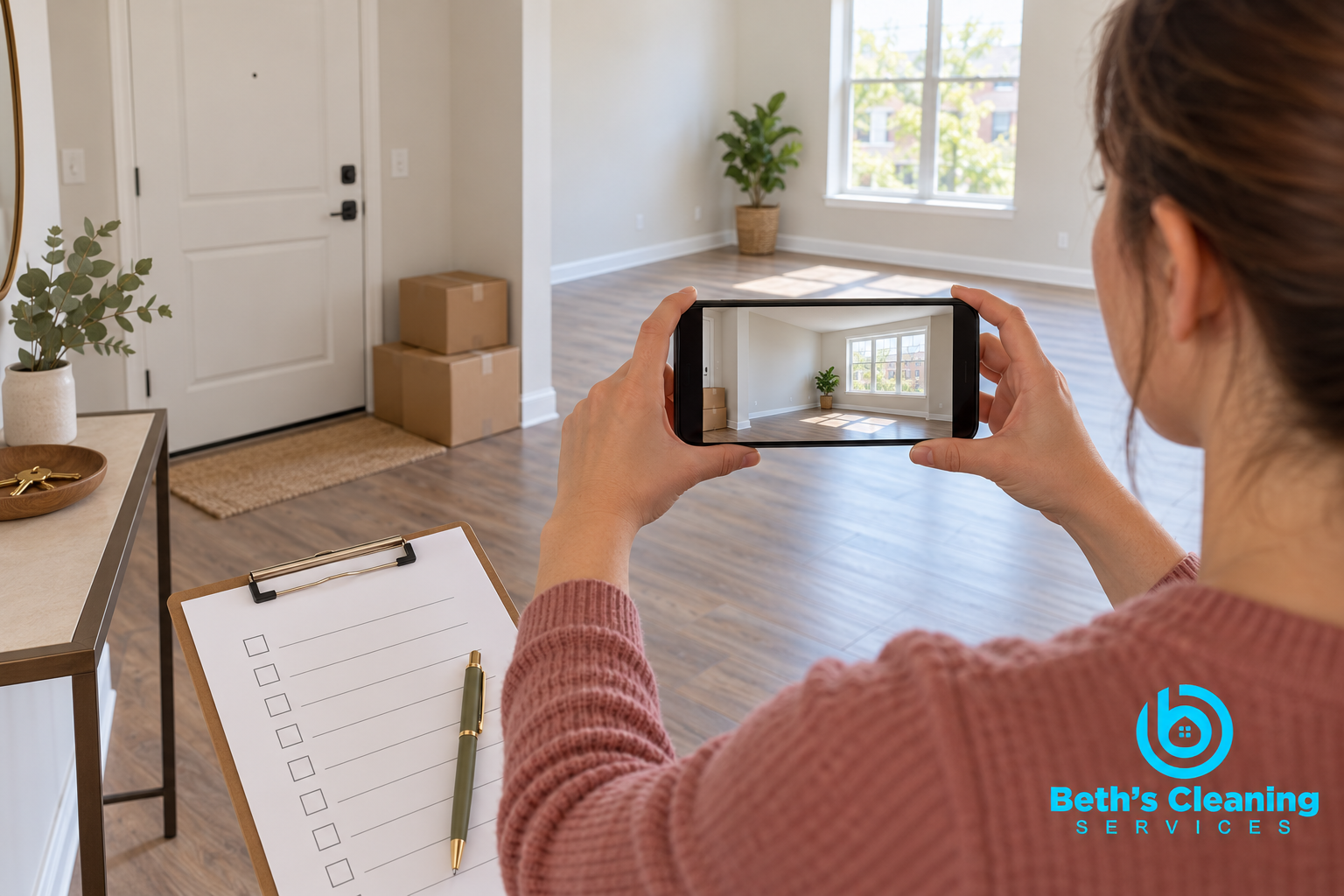
It works the same way at your new place. Before you bring anything inside, walk through with your phone and record anything that is not right. Review the statement of condition promptly and return any corrections within the applicable 15-day period.
Then clean before the boxes come in. An empty kitchen is much easier to clean than one full of dishes, and you’ll know what condition everything was in from day one. Beth’s has more on why a move-in clean matters.
If you haven’t found your next apartment yet, Spot Easy lists Boston apartments and rentals in surrounding cities from agents who are verified before they can post.
If you’re moving in or out anywhere in Essex County and want help with either end, you can get a free quote from Beth’s Cleaning.
This article provides general information and is not legal advice. Laws, regulations, lease terms, and individual facts can change the result. For current guidance, consult official Massachusetts resources or a qualified Massachusetts attorney.