
The oven is the most avoided cleaning task in most kitchens. It gets used daily, cleaned almost never, and when it finally gets attention it’s usually with a commercial cleaner so harsh it requires ventilating the entire house. The good news: the most effective oven cleaning method uses ingredients already in your kitchen and produces zero toxic fumes.
Why Oven Cleaning Gets Postponed So Long
Two things make people avoid oven cleaning. The first is the mess — baked-on grease and carbonized food residue look intimidating. The second is the commercial cleaner problem — spray-on oven cleaners work but smell terrible, require gloves and ventilation, and leave a chemical residue that burns off during the next use.
The natural method eliminates both problems. It requires almost no scrubbing and uses baking soda and vinegar — the same combination that handles grease throughout the rest of the kitchen.
The Baking Soda Method: How It Works
Baking soda is mildly abrasive and alkaline. Grease and carbonized food residue are acidic. Applied as a paste and left overnight, baking soda breaks down the chemical bonds that hold baked-on residue to oven surfaces — making everything wipe away the next morning with minimal effort.
The process:
- Remove the oven racks and set them aside
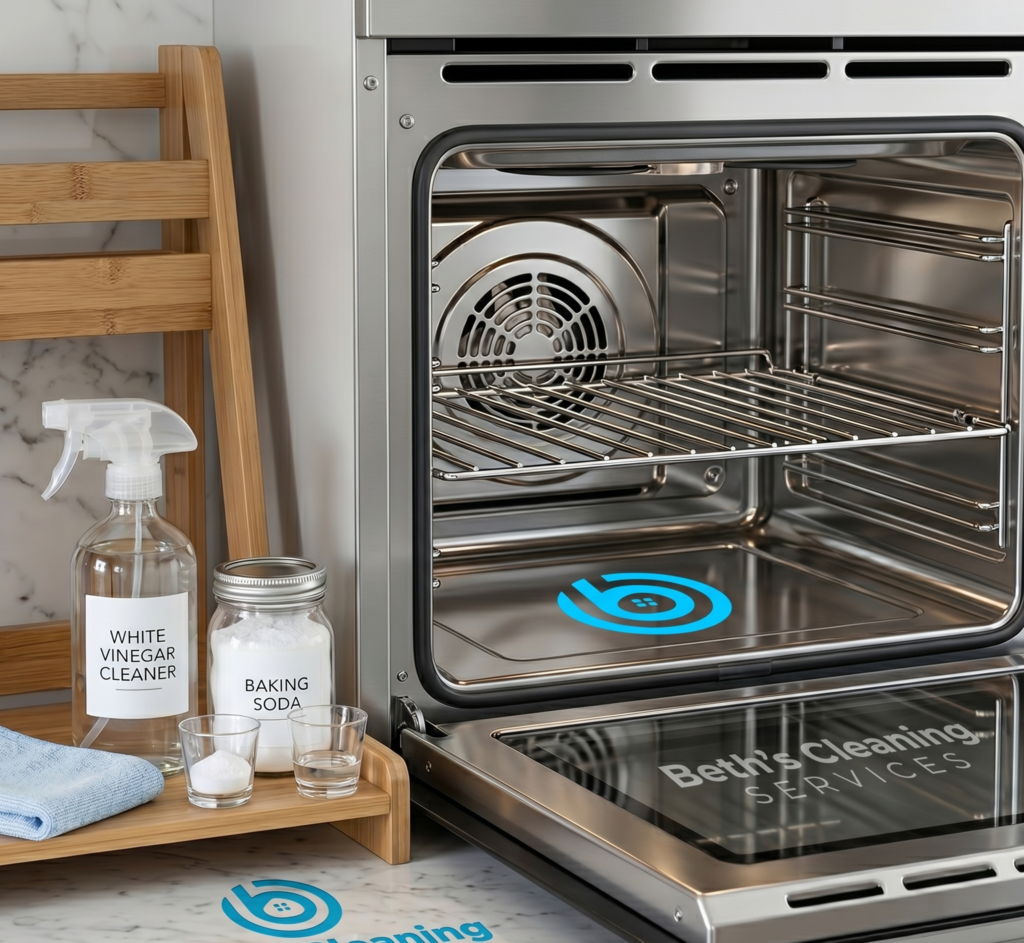
- Mix half a cup of baking soda with enough water to form a spreadable paste — roughly three tablespoons of water
- Spread the paste across every interior surface of the oven — walls, floor, ceiling, and door interior — avoiding the heating elements
- Leave the paste for a minimum of twelve hours, overnight is ideal
- The next morning, wipe away the dried paste with a damp microfiber cloth — it will come away brown and gray, taking the grease with it
- Spray white vinegar over any remaining baking soda residue — the fizzing reaction lifts the last traces cleanly
- Wipe with a damp cloth until the interior is completely clean
The result after one overnight application is an oven interior that looks genuinely restored — without a single toxic chemical.
The Oven Racks Need Separate Treatment
Oven racks accumulate the same baked-on grease as the interior but require a different approach because of their shape. The most effective method requires almost no scrubbing.
- Place the racks in a bathtub lined with old towels to protect the surface
- Fill the tub with hot water and half a cup of dish soap
- Add half a cup of baking soda and allow the racks to soak for a minimum of four hours — overnight produces the best result
- After soaking, the grease wipes away with a cloth or non-scratch sponge with almost no pressure required
- Rinse thoroughly and dry completely before returning to the oven
This method works on racks of any size and any level of buildup without damaging the rack finish.
The Oven Door Glass
The oven door glass is the most visible part of any oven and the part that shows buildup most obviously. Most people assume the brown haze is permanent. It isn’t.
Apply a thick baking soda paste directly to the glass, leave for thirty minutes, and scrub with a non-scratch pad in circular motions. For buildup between the glass panels — the zone that can only be accessed by partially disassembling the door — consult your oven’s manual for the specific access method. Most ovens allow the outer glass panel to be removed without tools for cleaning.
Prevention: The Habits That Eliminate Heavy Buildup
An oven that is maintained regularly never develops the kind of buildup that makes cleaning feel like a major project.
Three habits that keep oven cleaning fast and easy:
- Place a silicone oven liner or a sheet of aluminum foil on the bottom rack to catch drips before they bake onto the oven floor — remove and replace it monthly
- Wipe up fresh spills immediately after the oven cools — fresh spills take thirty seconds to remove, the same spill baked on for a week takes thirty minutes
- Run a light baking soda paste clean every month rather than a full deep clean every year — fifteen minutes monthly prevents the annual recovery project entirely
How Often to Deep Clean
For an oven used regularly, a full deep clean every three months keeps it functional and odor-free. Monthly wipe-downs between deep cleans take less than ten minutes and prevent any single session from becoming overwhelming.
An oven that smokes during use, produces burning smells, or has visible black carbonization on the walls and floor is overdue for a deep clean regardless of how recently it was last cleaned.
At Beth’s Cleaning Service, our kitchen deep cleaning service includes oven interiors as standard — the thorough, systematic clean that resets your kitchen completely and makes your regular maintenance routine genuinely effective.
👉 Visit bethcleaning.com to book your kitchen deep clean today.
📍 Serving Beverly, Peabody, Salem, Danvers, Swampscott & Lynn, MA

Follow us for more cleaning tips and inspiration!
📸 @beths_services on Instagram | 👍 BethCleaningServices on Facebook