
To clean a leather bag, start with its material and care instructions, then remove loose dust before using any approved product. Smooth finished leather, suede, patent leather, and coated canvas need different treatment. A gentle approach protects the finish better than scrubbing a mark until it disappears.
Identify the Material Before You Clean
Check the product page, care card, or manufacturer’s support service for the exact leather and finish. A bag can combine several materials: the body, lining, handles, edge paint, and metal fittings may each need separate care. Do not assume a method for a leather sofa or shoe is suitable for a handbag.
For example, Coach’s product care guidance distinguishes its core leathers from specialty materials, including suede and natural leather that should not be exposed to water. Follow the instructions for your specific bag rather than copying another brand’s routine.
How to Clean a Leather Bag Gently
Empty every compartment. Remove cards, receipts, pens, cosmetics, and detachable accessories. Lift out loose debris without stretching the lining. Check for an open pen or leaking container before working on the exterior so the source of the stain does not remain inside.
Remove surface dust. Where the care instructions permit it, use a clean, soft, dry cloth with light pressure. Inspect seams and handle attachments, but avoid digging into them with sharp tools. A worn corner or peeling edge needs assessment, not harder rubbing.
Select a compatible cleaner. Use only a product approved for that leather and finish. “Leather cleaner” is not a guarantee of compatibility. Skip all-purpose sprays, disinfecting wipes, vinegar, baking soda, and household stain-removal mixtures unless the bag maker expressly recommends them.
Test before treating a visible area. Follow the product’s directions on a concealed spot and allow the test to dry fully. Check for color transfer, darkening, a changed sheen, or tackiness. Stop if the surface changes. If there is no suitable hidden area, ask the manufacturer for advice.
Use a small amount as directed. Apply product to a cloth when the instructions call for it, work gently, and remove residue as specified. Avoid soaking seams or letting cleaner reach the lining and hardware. Do not combine several products in an attempt to speed up stain removal.
Condition Only When the Finish Allows It
Conditioner is a separate care step, not a universal stain remover. Confirm that it suits the specific leather and follow the recommended quantity and interval. Suede, coated materials, and specialty finishes should not automatically receive the same cream used on smooth leather.
As one product-specific example, Coach’s Leather Cleaner instructions exclude certain leathers and specify a drying period for the hidden test. Those directions illustrate why a fixed “condition every few months” rule cannot be applied to every bag.
Handle Wet Bags, Linings, and Accessories Separately
If a bag gets wet, remove its contents and gently blot excess moisture without rubbing. Consult its care instructions before adding anything else. Mulberry’s material care advice recommends removing residual water, loosely filling the bag with paper, and letting it dry naturally. Avoid a hair dryer, radiator, or direct sun as a shortcut.
Do not pull out a sewn-in lining or immerse the whole bag to clean its interior. Check the lining’s own care requirements, protect the leather from moisture, and seek specialist help for soaked padding or persistent odors. Wipe hardware only with a method approved for its plating; keep metal polish off leather.
Use the same material checks for wallets, belts, and detachable straps. Empty wallet slots, support straps while working, and avoid bending brittle sections. Cleaning cannot repair a cracked strap or loose attachment.
Store It Carefully and Know When to Stop
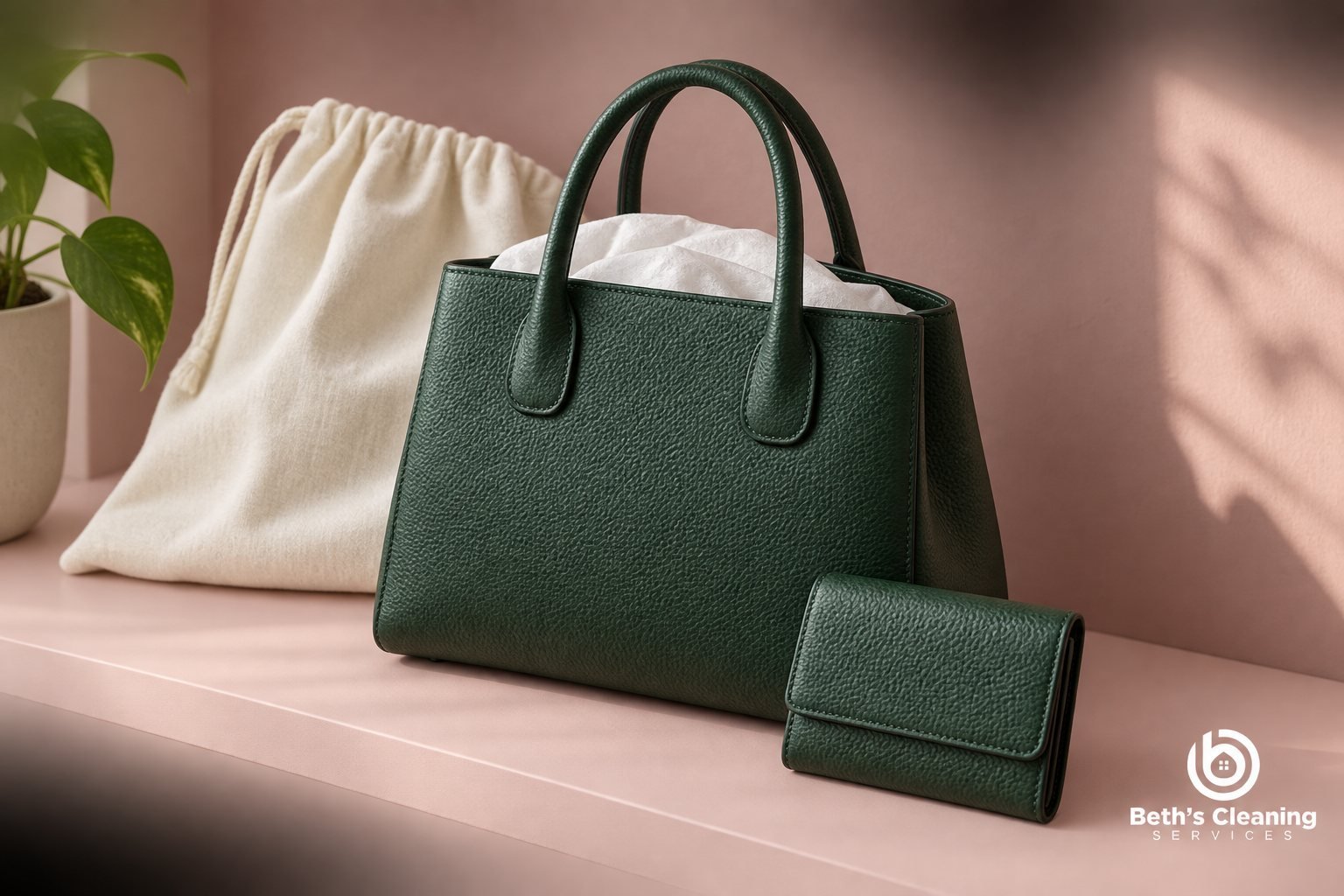
Once completely dry, support the bag’s shape without overfilling it and use its supplied dust bag if recommended. Keep pens and cosmetics in secure pouches during use. Check stored bags periodically rather than waiting for a stain or damaged handle to become worse.
Ask the manufacturer or a leather specialist about ink, oil, dye transfer, peeling finishes, or an unknown vintage material. Share which products have already touched the bag. For household upkeep in Peabody and surrounding service areas, explore Beth’s Cleaning Services’ regular cleaning; specialist handbag restoration requires a separate assessment.

Follow us for more cleaning tips and inspiration!
📸 @beths_services on Instagram | 👍 BethCleaningServices on Facebook