
To clean a smelly dishcloth or towel, wash it with the correct amount of laundry detergent on a cycle suitable for its fabric, then dry it completely before storing it. If the odor returns, check how the cloth dries between uses and whether the washer itself needs cleaning. More fragrance is not a substitute for removing residue.
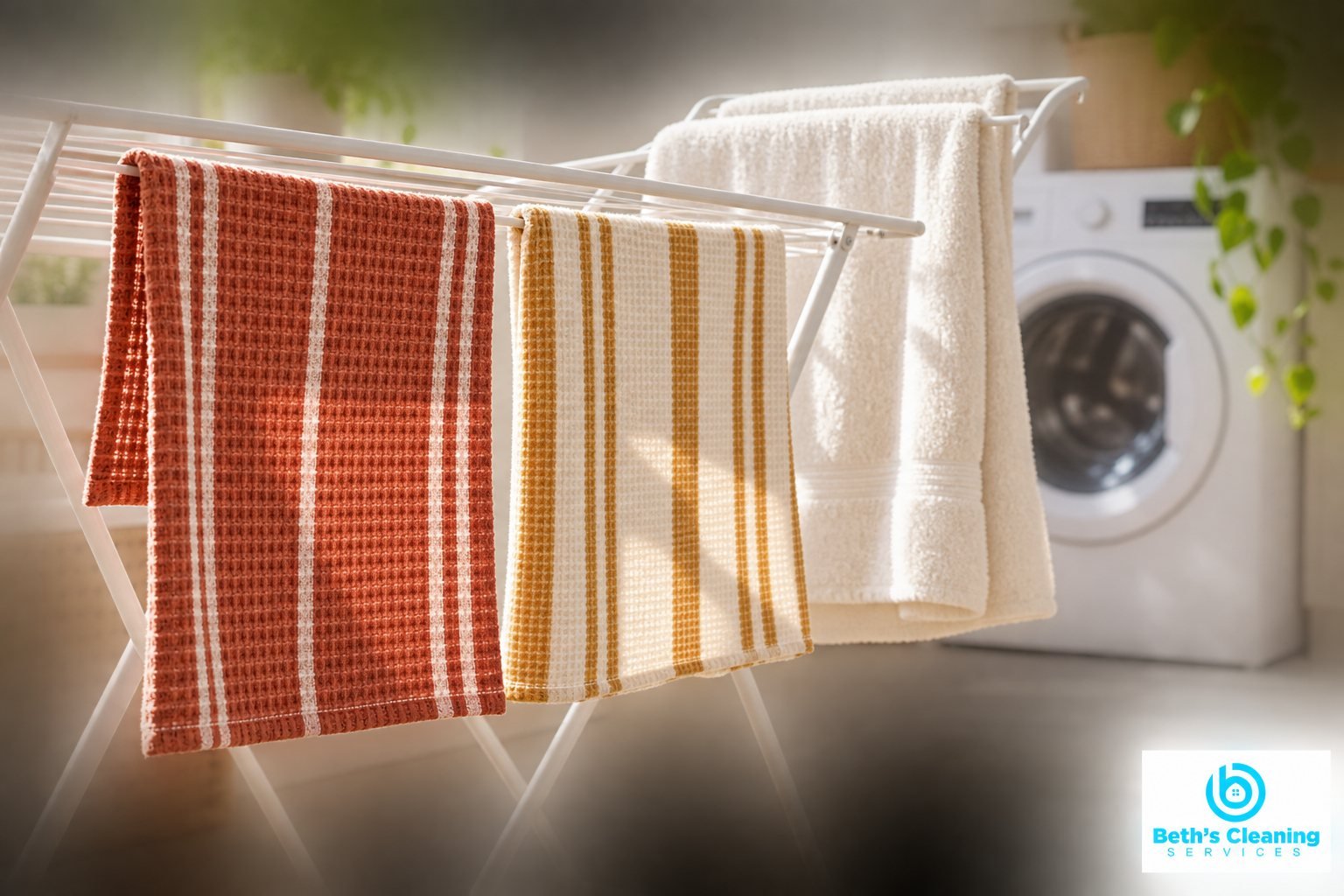
Why Dishcloths and Towels Smell Sour
A damp cloth left crumpled beside the sink dries slowly. Food residue and repeated use add to the problem. Laundry that sits wet in the washer can also develop an unpleasant smell. Start by changing those conditions rather than adding another scented product.
Keep separate cloths for washing dishes, drying clean hands, and wiping dirty surfaces. A towel used for a spill should go into the laundry rather than back onto the clean-towel hook. Keep a few fresh replacements within reach so changing cloths is convenient.
How to Clean a Smelly Dishcloth
Check the label. Cotton terry towels, decorative kitchen linens, and microfiber cloths can have different temperature and drying limits. Choose the hottest wash temperature the item’s care instructions allow, not an automatic hot cycle for every fabric.
Remove loose debris. Shake food particles into the trash and treat visible stains with a laundry product compatible with the fabric. Follow the product’s application directions. Do not use household surface cleaner as laundry detergent.
Measure the detergent. Use the amount specified for your load size, soil level, and water conditions. Use HE detergent when required by the washer. Leave room for the items to move instead of packing the drum tightly.
Choose a suitable cycle. Follow the washer manual and fabric label. A quick refresh cycle may not be the best choice for heavily soiled kitchen towels. If the items still smell after washing, investigate the cause and rewash appropriately before putting them away.
Dry promptly and completely. Transfer the load when the cycle finishes. Tumble-dry at the permitted setting or spread items out to air-dry. Check thick hems and folded edges before stacking towels in a cabinet.
Skip the Automatic Vinegar Rinse
Do not assume vinegar belongs in every washing machine or every towel load. Whirlpool’s appliance guidance cautions that vinegar can damage washer components over time. Check the instructions for your own machine before using household additives.
If a bleach or laundry sanitizer is needed for a particular situation, use only a product suitable for the fabric and follow all label directions. Never mix chlorine bleach with vinegar, ammonia, or other cleaners. An ordinary hot wash is not a blanket guarantee of disinfection.
Keep Towels Absorbent
Fabric softener and dryer sheets can leave coatings that reduce towel absorbency. For towels and many microfiber cloths, skipping them is a useful starting point; follow the textile maker’s instructions. Avoid adding extra detergent to compensate for a lingering smell, since correct dosing and rinsing matter more than extra suds.
Check the Washer When Clean Laundry Still Smells
Smell the empty washer and inspect accessible areas identified in its manual. Follow its recommended cleaning cycle, approved washer cleaner, and instructions for the dispenser or door seal. Never combine cleaning products, and do not run a washer-cleaning cycle with towels inside unless the manual specifically directs it.
Remove wet laundry promptly. Follow the appliance maker’s guidance for drying the drum and keep children and pets away from an open machine. If odor remains after the prescribed maintenance, arrange service rather than repeatedly treating every load with stronger additives.
Frequently Asked Questions
Can I just rinse a sour dishcloth? Rinsing may remove loose food, but a cloth that smells or is visibly soiled should be laundered before reuse. Hanging it open between uses helps it dry; it does not replace washing.
How often should I change kitchen towels? Change them whenever they are wet, dirty, or used for spills. Keep dish-drying towels separate from cloths used on counters and other dirty surfaces.
When should I replace a cloth? Replace badly worn items or those that retain odor despite appropriate washing, complete drying, and washer maintenance. Avoid keeping an unusable cloth in the kitchen rotation.
For help with routine home cleaning in Peabody and surrounding service areas, explore Beth’s Cleaning Services’ regular cleaning and confirm which tasks are included.
References: Whirlpool towel care, Whirlpool washer odor guidance, and American Cleaning Institute dishwashing guidance.

Follow us for more cleaning tips and inspiration!
📸 @beths_services on Instagram | 👍 BethCleaningServices on Facebook