
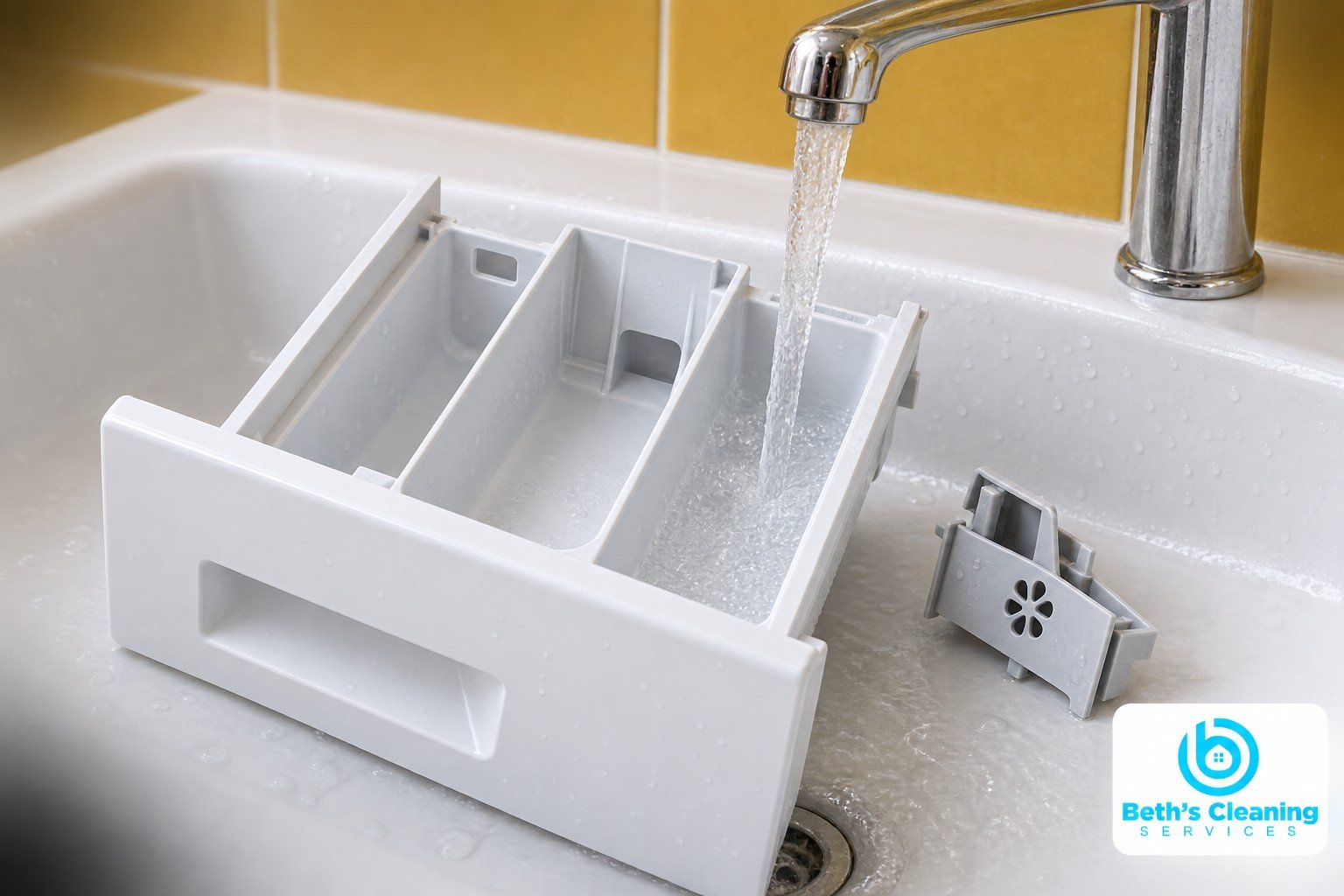
To clean a detergent drawer, use the removal and rinsing instructions for your washing machine. Sticky detergent and fabric softener can collect under inserts and around the drawer opening. Cleaning those accessible parts helps them dispense properly, but a clean drawer alone does not clean the washer tub or solve every laundry odor.
Identify the Drawer Before Taking It Apart
Find your model’s manual and check whether the dispenser is a conventional single-load drawer or an automatic dosing reservoir. Release tabs, removable caps, and cleaning procedures differ. Do not pull harder when a drawer stops; locate the release method first.
Finish the wash cycle, turn the washer off, and follow its instructions for disconnecting power before maintenance. Keep a small container and towel nearby for drips. Photograph the assembled inserts so you can return each one to the correct compartment.
How to Clean a Detergent Drawer and Its Inserts
Remove the drawer as directed and lift out only the parts marked as removable. A fabric-softener cap may cover a narrow siphon passage that needs attention. Keep small caps together rather than letting them wash toward the sink drain.
LG’s dispenser-maintenance guidance recommends warm water and a soft cloth or brush for its drawer and inserts, and specifically says not to use soap. This is a useful reminder that adding another cleaning product is not always helpful. Follow your own model’s directions.
Rinse away loose deposits, then gently work on sticky corners with a soft brush. Give hardened residue time to soften with the water temperature allowed by the manufacturer. Avoid metal scrapers, abrasive pads, boiling water, or a dishwasher cycle unless the manual expressly permits the method.
Wipe the Drawer Opening Carefully
Inspect the accessible upper and lower surfaces of the recess. Remove residue with the soft brush or damp cloth specified in the care guide. Keep liquid away from controls and do not pour a bowl of cleaning solution into the opening.
Do not probe hidden hoses, remove appliance panels, or force a tool into water outlets. If buildup is beyond normal reach, check the manufacturer’s service advice. Dry the accessible housing and drawer as directed before putting everything back.
Treat Automatic Dosing Reservoirs Separately
Automatic dispensers store detergent for multiple loads, so the rinse-and-dry routine for an ordinary open tray may not apply. Check how to empty the reservoir, clean its valves, and seal its lid before refilling. Do not dilute stored detergent or add a cleaner to the reservoir without approval in the manual.
For example, Samsung provides a separate auto-dispenser procedure for model WF50A8800AV. It includes warm-water residue removal, attention to the rear valve, a dry recess, and properly sealed compartment covers. Use that procedure only for the specified design, not as instructions for every Samsung washer.
Reassemble and Check Dispensing
Return each cap and insert to its original position and make sure it sits securely. Slide the drawer in using the correct angle and alignment. If it catches or will not close, remove it and check the fit rather than forcing it.
Follow any rinse or test-cycle instructions in the manual before the next laundry load. Check for leaks and whether additives dispense normally. LG notes that some residual water can be normal; a small amount is different from a compartment repeatedly full of undispensed product.
Reduce Residue Between Cleanings
Use the detergent type and dose recommended for the washer, load, and product concentration. Respect compartment fill limits. More detergent does not automatically improve cleaning, and excess product can leave deposits. Do not place detergent pods into a compartment unless the washer and pod instructions allow it.
Inspect the drawer regularly and clean sooner when residue appears. LG recommends monthly dispenser cleaning for the designs covered by its guide. Other models may specify a different schedule. If the manual recommends leaving a conventional drawer slightly open to dry, do so only where children and pets cannot access it; automatic reservoirs may need their covers sealed.
Know When Drawer Cleaning Is Not Enough
Recurring leaks, damaged seals, stubborn dispensing failures, or inaccessible buildup need further troubleshooting. Persistent washer odor may also involve the tub, door gasket, or drain system. Follow the separate maintenance instructions for those parts rather than mixing cleaners or assuming the drawer is the only cause.
For routine household upkeep in Peabody and surrounding service areas, explore Beth’s Cleaning Services’ regular cleaning and confirm the tasks included. Internal appliance maintenance and repairs should follow the manufacturer’s service guidance.

Follow us for more cleaning tips and inspiration!
📸 @beths_services on Instagram | 👍 BethCleaningServices on Facebook