
To clean scuffed floors and restore their clean appearance, remove loose grit first, then treat the mark with a soft cloth and a cleaner approved for your flooring. Black shoe marks may sit on the surface, while scratches cut into it. Cleaning can remove residue; it cannot rebuild a worn finish or fill a gouge.
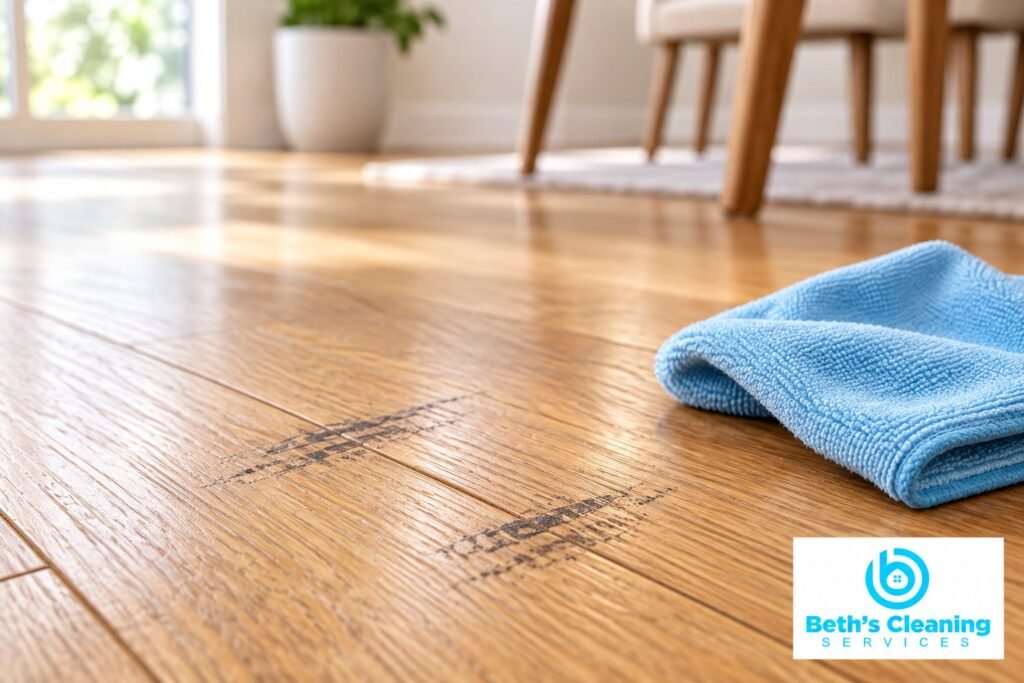
Is it a scuff, a scratch, or a dull finish?
Check the mark in good light. A dark streak that starts to transfer to a cloth may be surface residue. A groove, chipped edge, or pale line that remains after gentle cleaning may be damage. Widespread dullness can come from cleaner buildup or normal wear. Identifying the problem helps you avoid unnecessary scrubbing.
How to clean scuffed floors step by step
1. Remove grit before spot cleaning
Sweep with a soft broom or vacuum using a hard-floor setting that will not scratch the surface. Pay attention to entryways and chair legs. Dragging grit across the floor while rubbing a mark can create new scratches.
2. Check the floor’s care guide
Identify the material and, for wood, the finish. Use the floor maker’s recommended cleaner at the labeled concentration. An all-purpose spray or homemade mixture is not automatically suitable for every floor. Test the selected cleaner in a hidden area before treating a visible mark.
3. Wipe the mark gently
Start with a clean, dry microfiber cloth. If the scuff remains, lightly dampen the cloth with the approved cleaner and wipe with gentle pressure. Keep liquid away from seams and do not leave a puddle. Use a fresh part of the cloth as the mark transfers. Stop if you see a change in color or sheen.
4. Clean the surrounding area and let it dry
Follow the cleaner’s instructions for removing residue or rinsing. Use a clean mop pad so you are not spreading the loosened dirt. Allow the floor to dry completely before walking on it or replacing rugs. Compare the treated patch with the surrounding floor in daylight.
Match the method to your flooring
- Finished hardwood: use a product compatible with the coating. Keep moisture minimal and avoid abrasive pads. Oiled or waxed wood may need a different maintenance system.
- Laminate: protect joints from standing water. Avoid sanding, wax, and polish unless the manufacturer specifically approves a product for that floor.
- Luxury vinyl: choose an approved resilient-floor cleaner and a soft cloth. Aggressive scrubbers can damage the wear layer.
- Ceramic or porcelain tile: use a suitable tile cleaner and a non-scratch tool. Do not assume a method for glazed tile is safe for natural stone.
- Natural stone: use a stone-safe cleaner. Acidic products such as vinegar can etch acid-sensitive stone.
Why a clean floor may not look shiny
Some floors are designed with a matte or satin finish. Adding shine can change their intended appearance and leave a slippery or uneven film. If the floor is clean but still looks worn, ask the manufacturer or a flooring professional about appropriate restoration. Do not apply furniture polish or a general-purpose wax to make it glossy.
Prevent new scuff marks
Use floor-compatible entry mats and remove gritty outdoor shoes. Keep felt furniture pads clean and replace worn ones. Lift chairs and lightweight furniture instead of dragging them; arrange help for heavy pieces. These small changes address the sources of marks rather than repeatedly scrubbing the same traffic areas.
Common floor-cleaning questions
Can I use a melamine sponge or baking soda?
Both are abrasive and may dull a coating even if they remove a mark. Use them only if your floor manufacturer explicitly permits the method. A soft cloth and an approved cleaner are a better starting point.
Will mopping remove scratches?
Mopping removes dirt and residue, not missing material. If a mark remains as a groove after cleaning, have it assessed before applying a repair product.
Keep floors clean between deeper visits
Beth’s regular cleaning service in Peabody includes floor care as part of home cleaning. Share your floor type and care instructions with the team so the cleaning approach suits the surface. For laminate-specific guidance, consult Shaw’s laminate care instructions or your own manufacturer’s guide.

Follow us for more cleaning tips and inspiration!
📸 @beths_services on Instagram | 👍 BethCleaningServices on Facebook