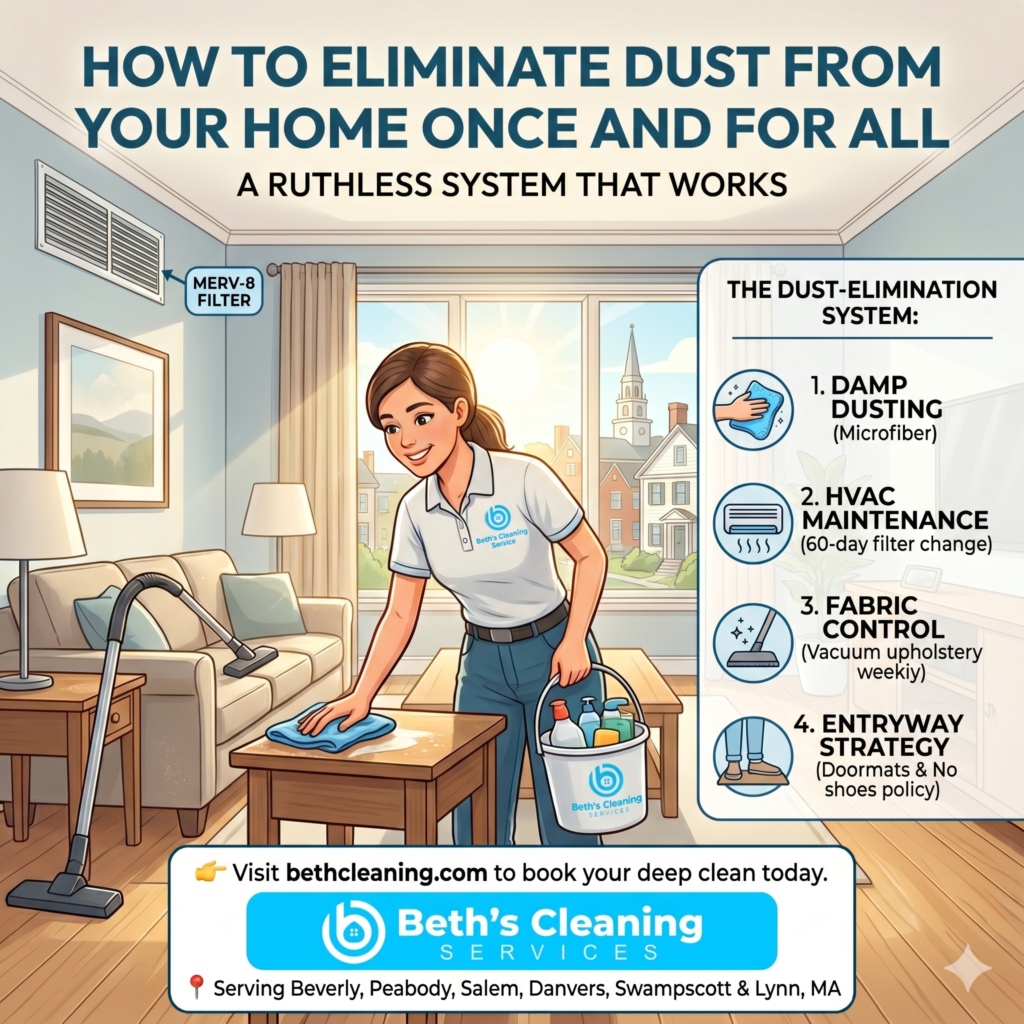
Dust is the one cleaning battle that never ends. You wipe a shelf on Monday and by Thursday it needs doing again. Most people assume this is just how it is — an unavoidable fact of home ownership. It isn’t. Excessive dust is almost always a symptom of specific, fixable problems. Fix the problems and the dust becomes dramatically easier to manage.
Where Dust Actually Comes From
Most people assume dust is primarily dirt tracked in from outside. It isn’t. The majority of household dust is generated inside the home itself — shed skin cells, fabric fibers from clothing and furniture, pet dander, and deteriorating materials from carpets and upholstery.
The rest enters through open windows, doors, and — critically — through HVAC systems that recirculate whatever has accumulated in the ductwork. Understanding the source changes how you fight it.
Your HVAC System Is Either Helping or Hurting
The heating and cooling system in your home moves air through every room continuously. If the filters are dirty or the ducts are dusty, the system distributes dust rather than removing it — undoing every cleaning effort you make the moment it cycles on.
Two changes that make an immediate difference:
- Replace HVAC filters every 60 days minimum — every 30 days in homes with pets
- Use a MERV-8 or higher rated filter which captures significantly finer particles than standard filters
A clean filter turns your HVAC system from a dust distributor into a dust collector. The impact on overall household dust levels is immediate and significant.
Fabric Is the Enemy
Soft surfaces — carpets, rugs, curtains, upholstered furniture, and bedding — are the primary dust reservoirs in any home. They trap particles that hard surfaces would release back into the air, but they also shed fibers continuously that become airborne dust themselves.
Reducing fabric surfaces in high-traffic areas reduces baseline dust levels measurably. Where fabric is unavoidable, frequency of cleaning matters:
- Vacuum upholstered furniture weekly, not monthly
- Wash curtains every two to three months
- Replace heavily worn rugs that are shedding fibers visibly
Hard flooring in bedrooms and living areas doesn’t eliminate dust but makes it dramatically easier to remove before it accumulates.
The Dusting Method Most People Get Wrong
Dry dusting with a feather duster or dry cloth doesn’t remove dust. It displaces it — launching particles into the air where they remain suspended for hours before settling back onto every surface in the room.
The correct method is always damp dusting. A lightly dampened microfiber cloth traps particles on contact and removes them from the surface entirely. Work from the highest surfaces downward, turning the cloth frequently to avoid redistributing what you’ve already collected.
Microfiber is essential — its electrostatic properties attract and hold dust rather than pushing it around. According to the American Lung Association, microfiber cloths remove significantly more dust per pass than conventional cleaning materials.
The Hidden Dust Zones Nobody Addresses
Visible surfaces get dusted. These zones accumulate continuously and almost never get attention:
- Tops of door frames — collect thick dust mats that fall every time the door opens forcefully
- Refrigerator coils — dusty coils reduce appliance efficiency and release particles into the kitchen air
- Under and behind large furniture — sofas, beds, and dressers create sheltered zones where dust accumulates into dense layers
- Air vents and return grilles — become coated with dust that gets pushed back into the room with every cycle
- Lamp shades — fabric shades in particular collect and release dust with every switch of the light
Adding these zones to a monthly cleaning pass makes an enormous difference in overall dust levels.
Entryways Control What Comes In
A meaningful percentage of the dust and particulate matter in your home entered through the front door on shoes, clothing, and bags. Controlling the entryway reduces the total load the rest of the home has to manage.
Three entryway habits that cut indoor dust significantly:
- A high-quality doormat outside and inside every exterior entrance
- A no-shoes policy indoors — or at minimum, shoes removed at the door
- A weekly vacuum and wipe of the entryway itself before it distributes tracked particles throughout the home
When Dust Keeps Winning
If dust returns within days of thorough cleaning, the problem is systemic — dirty ducts, inadequate filtration, deteriorating materials, or high-traffic patterns that standard cleaning can’t keep pace with. Professional duct cleaning combined with a whole-home deep clean addresses the root causes rather than just the symptoms.
At Beth’s Cleaning Service, our deep cleaning service tackles the dust zones that regular cleaning misses — restoring your home to a baseline where your daily habits can actually keep up.
👉 Visit bethcleaning.com to book your deep clean today.
📍 Serving Beverly, Peabody, Salem, Danvers, Swampscott & Lynn, MA