
To remove candle soot and wax without turning a small mark into permanent damage, identify the surface first. Painted drywall, glass, finished metal, stone, fabric, and carpet need different methods. Work only after the candle and wax are completely cool, and test any cleaning step in a hidden spot.
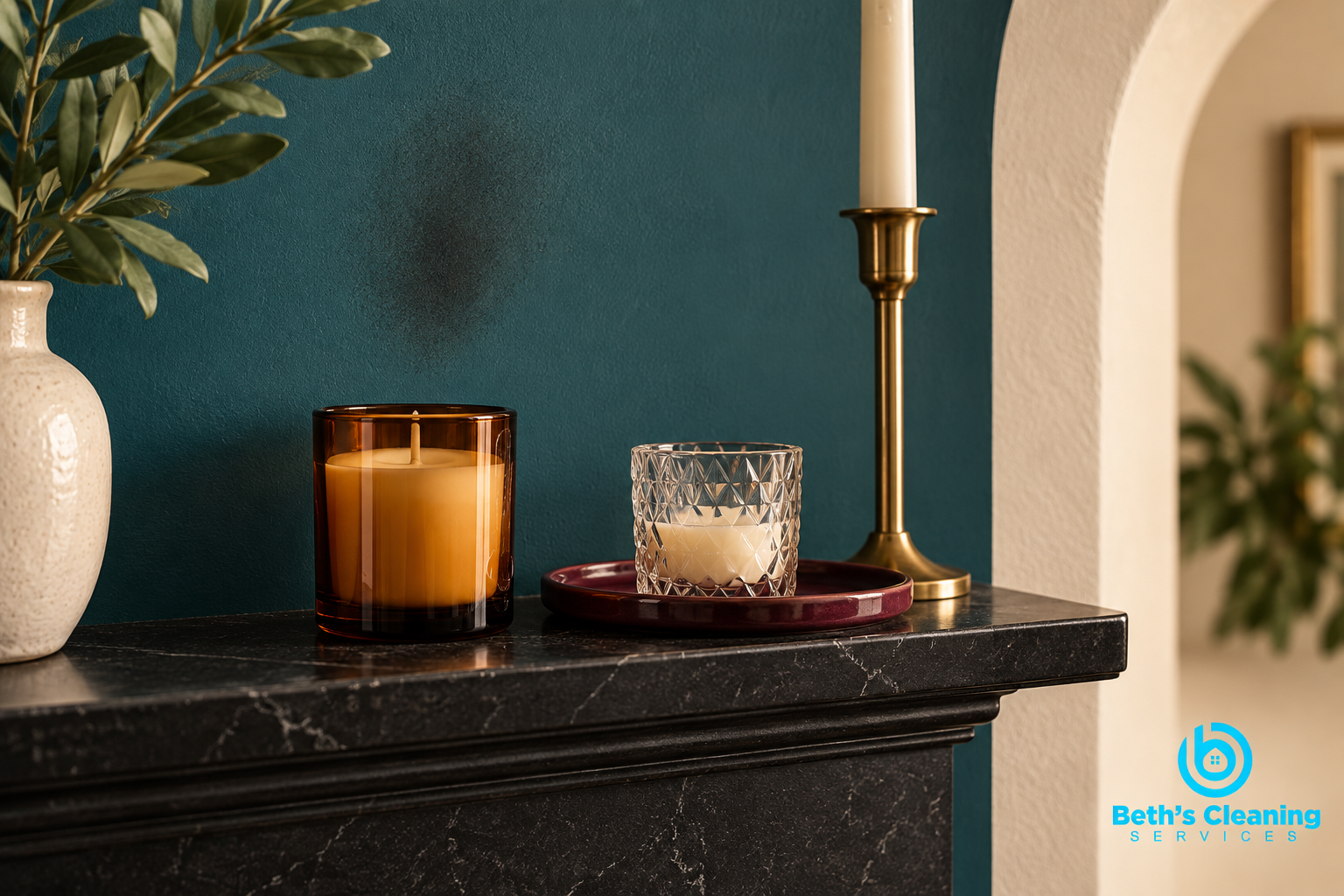
Start With a Surface Check
Confirm the wall’s paint type and sheen if you can. Flat and matte paint generally tolerates less rubbing and moisture than satin or semi-gloss. For a candleholder, check whether it is ordinary glass, painted glass, ceramic, plated metal, unfinished brass, stone, or another material. Decorative coatings and glued details can change what is safe.
- Let wax harden naturally; never handle hot liquid wax.
- Use a flexible plastic edge, not a knife or metal scraper.
- Keep moisture away from outlets, switches, and damaged drywall.
- Stop if color transfers to the cloth or the finish becomes dull.
- For valuable, antique, porous, or unknown materials, consult a specialist.
How to Remove Candle Soot From Painted Walls
1. Remove Loose Particles Dry
Do not start by wiping the mark with a wet rag. That can spread loose carbon into a larger gray smear. If the deposit is light, hold a vacuum’s soft brush or nozzle near the wall without dragging it over the paint. For a distinct soot mark, a dry soot-cleaning sponge may lift particles when used with light, straight passes. Follow its label and expose a clean section as it becomes dirty.
2. Test Before Damp Cleaning
Sherwin-Williams recommends testing the cleaner and technique in an inconspicuous area, using a nonabrasive cloth or sponge, and avoiding excess water. If the paint is fully cured and washable, try a small amount of mild soap in warm water. Wring the cloth thoroughly, dab or wipe gently, then use a second barely damp cloth to remove residue. Blot dry.
Stop if the soot remains embedded, the wall develops a shiny patch, or paint comes off. A stain-blocking primer and repainting may be more appropriate than repeated scrubbing. Broad soot deposits, recurring black marks, or residue from a fire call for professional assessment rather than routine spot cleaning.
How to Remove Cooled Wax From a Wall
Support a thin plastic card almost parallel to the wall and lift from the edge of the hardened wax. Do not dig into the paint. Skip a hair dryer or iron unless the paint and wall manufacturer specifically approve heat; warming can drive dye or oil into the finish and can soften paint. After the bulk wax is gone, test mild soapy water on any residue. Colored wax may leave a dye stain that cleaning cannot safely remove.
How to Clean Glass Candle Holders
Make sure the holder is cool and intact. Follow the candle or holder maker’s care directions when available. The National Candle Association notes that some people chill a suitable candleholder so hardened wax contracts, but not every glass, finish, or glued decoration belongs in a freezer. Never move glass directly between extreme temperatures, and do not pour boiling water into it.
If chilling is allowed, set the protected holder upright until the wax firms, then lift the wax with a plastic edge. If chilling is not suitable, remove only what releases easily at room temperature. Wash a plain, washable holder with mild dish soap and comfortably warm water, rinse, and dry. Keep wax out of drains; collect the pieces in the trash or follow local disposal guidance.
Metal, Stone, Fabric, and Carpet Need Different Care
On finished metal, a plastic card may remove the cooled wax, but acids such as vinegar can damage some metals and patinas. Porous stone can absorb wax and dye. Upholstery and carpet fibers vary in heat tolerance, backing, and stain protection. Avoid a universal iron-and-paper method: heat can set color, melt synthetic fibers, or affect backing. Check the care label and manufacturer guidance, or ask a qualified textile or stone professional.
Prevent Soot and Wax Marks
- Trim the wick to about 1/4 inch before lighting, as recommended by the National Candle Association.
- Keep the flame away from drafts, vents, fans, and strong air currents that can cause flickering and visible soot.
- Follow the candle label for burn time, extinguishing, and container use.
- Use a stable, noncombustible holder that can catch drips.
- Place lit candles at least 12 inches from anything that can burn, following U.S. Fire Administration guidance.
- Extinguish candles before leaving the room or going to sleep; consider flameless candles.
Frequently Asked Questions
Can I use vinegar on candle soot or wax residue?
Do not treat vinegar as a universal finish cleaner. Acids can affect natural stone, some metals, grout, and specialty coatings. Use the surface manufacturer’s approved product and test it first.
When should I stop cleaning a painted wall?
Stop when paint transfers, the sheen changes, drywall softens, or the mark does not improve after a gentle tested method. Repainting or professional restoration may protect the surface better than aggressive scrubbing.
Can Beth’s Cleaning remove candle soot and wax?
Beth’s Cleaning Services can help with routine household surfaces. Soot, wax, smoke residue, delicate finishes, and specialty stain removal depend on the material and service scope, so confirm the details when you request regular cleaning in Peabody.
Sources and Further Reading
- Sherwin-Williams: How to Clean Painted Walls
- National Candle Association: Expert Tips
- U.S. Fire Administration: Candle Fire Safety
- U.S. Consumer Product Safety Commission: Candles Business Guidance and Standards

Follow us for more cleaning tips and inspiration!
📸 @beths_services on Instagram | 👍 BethCleaningServices on Facebook