
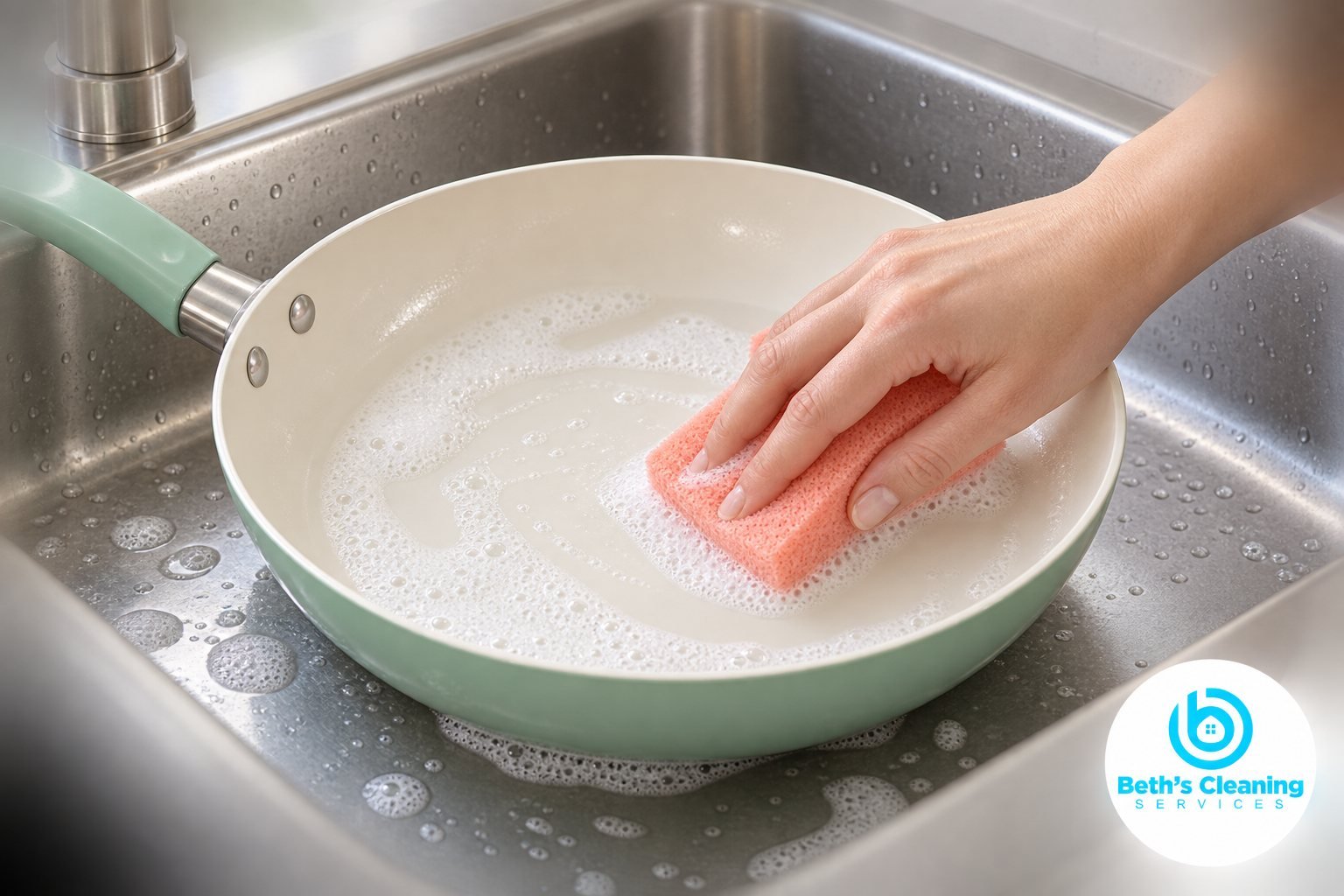
To clean a nonstick pan, let it cool, wash with mild dish soap and a soft sponge, rinse, and dry thoroughly. Ceramic-coated pans need the same gentle starting point, but deeper cleaning depends on the specific coating. Removing food residue is useful; scrubbing away the finish is not.
Identify the Coating Before Cleaning
Check the product name and care instructions. Ceramic-coated nonstick cookware is different from solid ceramic cookware, enamel, stainless steel, or seasoned carbon steel. A technique that works on one surface may damage another. Note any restrictions for handles, lids, and the exterior finish as well.
Keep the care guide somewhere easy to find. When a stubborn spot appears, you will know which treatment is approved instead of choosing a household cleaner based only on the word “ceramic.”
How to Clean a Nonstick Pan After Each Use
Allow it to cool naturally. Move the pan off the hot burner and wait until it can be handled safely. Do not plunge hot cookware into cold water; the sudden temperature change can warp a metal base and damage a glass lid.
Remove loose food and grease. Empty the pan, then wash the interior and exterior with warm water, mild dish soap, and a soft, clean sponge. Pay attention to the rim and handle attachment without digging into seams with a knife or metal pick.
Rinse and dry. Remove soap and loosened residue, then dry with a clean towel. Check the base before returning the pan to a cooktop. A quick wipe that leaves a greasy film is not a substitute for washing after cooking.
Soften Stuck Food Before Scrubbing
If food remains, follow the maker’s soaking instructions. A little warm, soapy water inside a cooled pan can soften residue so it lifts with a nonabrasive sponge. Avoid prolonged immersion of the entire pan, especially where handles or fittings have separate care requirements.
Do not escalate automatically to steel wool, scouring powder, oven cleaner, or a razor blade. The outside of a pan may tolerate a product that its cooking surface does not. Keep any exterior-only treatment away from the coated interior and wash away residues as directed.
For reference, GreenPan’s care guide distinguishes everyday washing from a specific treatment for carbonized oil on its ceramic coating. Its restoring-sponge method should not be assumed suitable for every nonstick brand. Use a specialty sponge or chemical treatment only when your own manufacturer approves it.
Check Dishwasher and Deep-Cleaning Instructions
Dishwasher suitability varies by model. Hand washing gives you more control over tools and contact with other cookware. Even if the pan is labeled dishwasher-safe, check whether the manufacturer recommends hand washing to preserve its appearance and performance.
Baking soda, vinegar, and melamine sponges are not universal solutions. If your manual describes one, follow the exact surface, concentration, temperature, and application instructions. Do not combine several recipes or repeat an unsuccessful treatment with more pressure.
Prevent Sticky Buildup and Storage Damage
Use the cooking temperatures and oil guidance supplied with your pan. Avoid leaving an empty pan heating unattended. Some manufacturers discourage aerosol cooking sprays because residue can accumulate; use the recommended cooking fat and amount instead.
Choose utensils compatible with the coating. Soft silicone or wooden tools are a gentle default, even where a particular product allows some metal utensils. Cutting food directly in the pan or scraping with sharp edges adds unnecessary wear.
Store cookware dry. If stacking is permitted, place a clean pan protector between pieces and keep heavy rims or handles from pressing into the cooking surface. Check the protector for grit before reuse.
Know When Cleaning Will Not Fix the Problem
Sticky residue can sometimes be removed, but worn coating cannot be washed back into place. Inspect chips, peeling, deep scratches, loose handles, or a base that rocks. Stop using visibly damaged cookware and ask the manufacturer whether replacement is needed. Do not sand, repaint, or try to season a coated pan like bare carbon steel.
For household kitchen upkeep in Peabody and surrounding service areas, explore Beth’s Cleaning Services’ regular cleaning and confirm which tasks are included. Specialty cookware still needs care matched to its own instructions.

Follow us for more cleaning tips and inspiration!
📸 @beths_services on Instagram | 👍 BethCleaningServices on Facebook