
To clean a humidifier, start with its manual rather than a universal vinegar recipe. Tanks, heating elements, ultrasonic membranes, and replaceable wicks need different care. Emptying water, removing deposits, and following the correct disinfection procedure can reduce buildup; they do not guarantee mold-free mist or replace control of excess room humidity.
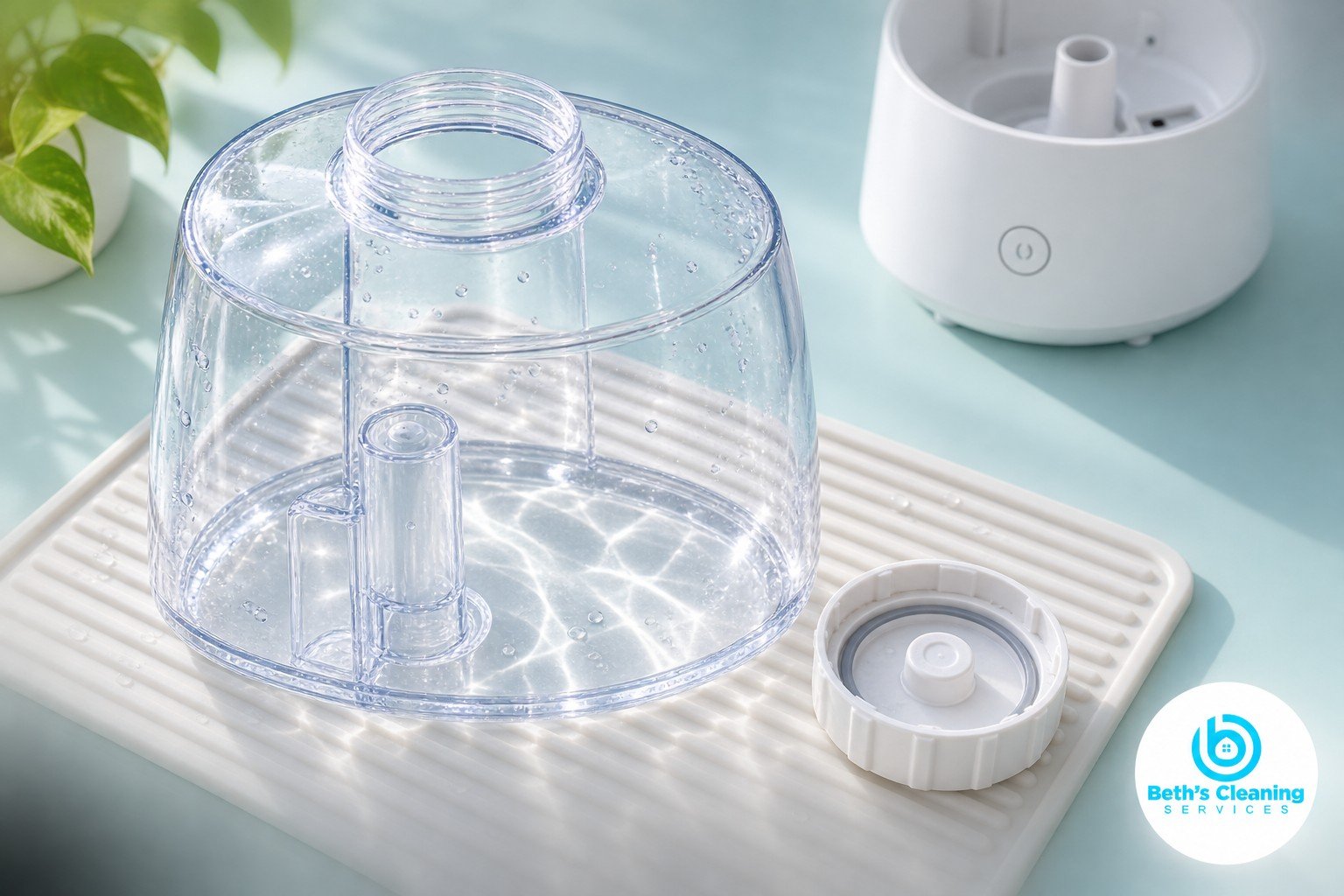
Empty and dry the tank every day
The EPA’s home humidifier guidance recommends daily emptying, drying, and refilling of portable units. Unplug first. Pour out leftover water instead of topping it off, wipe accessible water-contact surfaces dry, and refill with fresh water when needed. Follow the model’s pouring directions so water stays out of electrical openings.
EPA also recommends cleaning portable humidifiers every third day. Use your manufacturer’s instructions for the cleaning method, permitted products, and care of individual parts. Console and furnace-mounted systems have different maintenance requirements; this guide focuses on portable household units.
Prepare to clean a humidifier safely
Switch off and unplug the appliance before removing its tank. Let a warm-mist model cool as directed; the Honeywell HWM845 manual, for example, calls for at least 20–30 minutes after use. Work on a water-resistant surface and keep the electrical base out of the sink.
Identify which pieces can be removed, rinsed, or soaked. Photograph their positions if reassembly is unfamiliar. Do not submerge the whole appliance or assume that every plastic part is dishwasher-safe. In the HWM845, only certain listed components are approved for specified dishwasher conditions; its tank and base are not.
Remove scale separately from disinfecting
Descaling loosens mineral deposits. Disinfecting is a separate treatment with its own product, dilution, contact time, and rinse instructions. The HWM845 manual explicitly separates these processes. Use your own model’s quantities and directions rather than borrowing a recipe from a different tank size or design.
Never mix bleach with vinegar, ammonia, or other cleaners. Fully empty and rinse between separate treatments, and do not run the humidifier with cleaning solution inside. Avoid adding extra product or extending a soak beyond the instructions. A stronger solution is not automatically safer or more effective.
Remove deposits only with tools the manufacturer permits. Do not scrape an ultrasonic membrane or heating element with a knife or metal brush. If scale remains after the approved procedure, consult the manufacturer rather than forcing it loose. Rinse treated water-contact parts thoroughly before returning the unit to service.
Give filters and wicks their own care
A wick is not the same as the washable tank. Honeywell’s humidifier cleaning guidance says not to clean its filters with soap or chemicals and to replace a filter promptly if it develops mold or an unusual smell. Check your model’s filter instructions and replacement schedule before soaking anything.
If residue, odor, or suspected mold remains in inaccessible areas, stop using the appliance and ask the manufacturer about replacement parts or further service. Do not disguise an odor with fragrance or add disinfectant to operating water. Use additives only where the appliance instructions specifically permit them.
Use appropriate water and watch room humidity
For ultrasonic and impeller units, EPA recommends low-mineral water; distilled water can reduce mineral scale and white dust. It does not eliminate the cleaning routine. Bottled spring or mineral water is not equivalent to distilled water.
Measure room humidity with a hygrometer and keep it at or below 50%, following EPA guidance. Lower output or reduce use if windows develop condensation or nearby surfaces become damp. Keep mist away from bedding, curtains, and furniture. More moisture is not always better.
Dry thoroughly before storage
At the end of the season, clean the appliance, dry all parts, and handle used filters or cartridges according to the instructions. Store it in a dry place and clean it again before the next season. Keep the manual and replacement part number with the unit so restarting does not become a guessing exercise.
For help with routine cleaning of surrounding rooms, explore Beth’s Cleaning Services’ regular home cleaning and confirm included tasks when booking. Appliance maintenance should follow its manufacturer’s directions.

Follow us for more cleaning tips and inspiration!
📸 @beths_services on Instagram | 👍 BethCleaningServices on Facebook