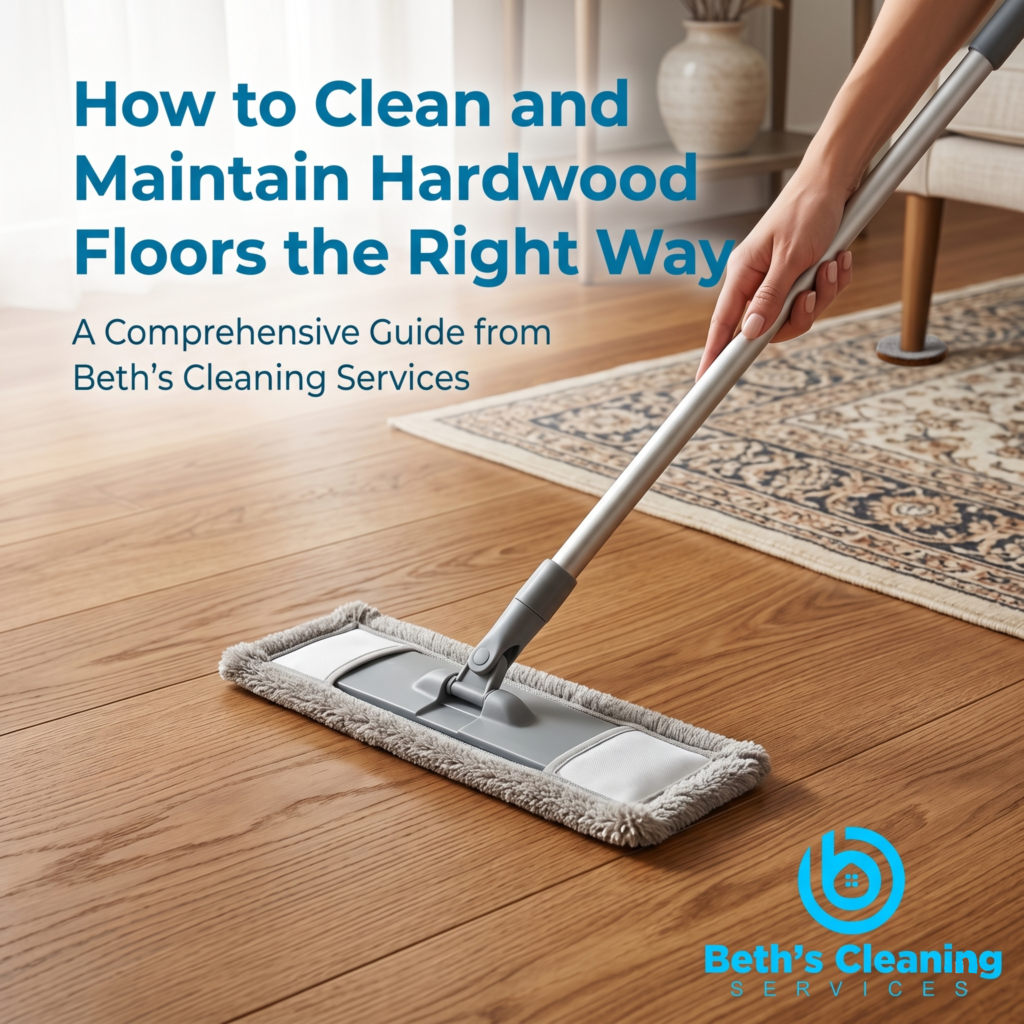
Hardwood floors are one of the most desirable features in any home. They’re also one of the most misunderstood when it comes to cleaning. The wrong product, the wrong method, or the wrong frequency can permanently damage a floor that was designed to last a lifetime. Most hardwood floor problems aren’t caused by neglect — they’re caused by well-intentioned cleaning done incorrectly.
The Biggest Mistakes People Make With Hardwood
Before getting into what works, it’s worth understanding what causes the most damage — because these mistakes are extremely common.
Using a wet mop is the single most damaging thing you can do to hardwood floors. Wood absorbs moisture and expands. Over time, wet mopping causes warping, cupping, and finish deterioration that is expensive to reverse and sometimes impossible to fully repair.
Using vinegar is equally harmful despite being widely recommended online. Vinegar is acidic and breaks down the polyurethane finish that protects hardwood floors. Each application strips a microscopic layer of protection until the finish fails entirely.
Steam mops are another common mistake. The heat and moisture they produce penetrate wood fibers and cause swelling and warping — often permanently.
Daily Care: Prevention Is Everything
The most effective hardwood floor maintenance is almost entirely preventative. The majority of hardwood floor damage comes from abrasion — grit and sand particles tracked in from outside that act like sandpaper underfoot with every step.
Three daily habits that protect hardwood floors more than any cleaning product:
- Place high-quality mats at every exterior entrance to capture grit before it reaches the floor
- Remove shoes at the door — outdoor soles carry sand, gravel, and debris that scratch finish on contact
- Sweep or dust mop daily in high-traffic areas — a dry microfiber dust mop picks up abrasive particles before foot traffic grinds them into the surface
These three habits alone extend the life of a hardwood floor finish by years.
Weekly Cleaning: The Right Method
Once abrasive particles are addressed daily, weekly cleaning maintains appearance and hygiene without causing damage.
The correct weekly sequence:
- Dust mop or vacuum first — always before any liquid contact — using a hardwood-specific vacuum setting that disables the beater bar
- Follow with a barely damp microfiber mop using a pH-neutral hardwood floor cleaner
- The mop should feel almost dry to the touch — if it leaves visible moisture on the floor, it’s too wet
- Work in the direction of the wood grain
- Never allow water to pool or sit on the surface
A properly dampened mop evaporates within seconds of contact. If the floor takes more than a minute to dry after mopping, the mop is too wet and damage is occurring with every pass.
Dealing With Spills Immediately
Spills are the most acute threat to hardwood floors and the easiest to manage with the right immediate response. The critical rule: no spill should sit on hardwood for more than thirty seconds.
Blot — never wipe — spills with a dry absorbent cloth. Wiping spreads liquid laterally and drives it toward seams between boards where it causes the most damage. Blotting lifts liquid straight up from the surface.
After blotting, dry the area completely with a clean dry cloth. For sticky spills, a single pass with a barely damp cloth followed immediately by a dry one is sufficient.
Scratches: Prevention and Treatment
Surface scratches in hardwood finish are inevitable in any lived-in home. The goal is minimizing them and addressing them before they penetrate through the finish into the wood itself.
Prevention measures that make a significant difference:
- Apply felt pads to the bottom of all furniture legs and replace them when they wear thin
- Use area rugs in high-traffic zones — under dining tables, in front of sofas, and in hallways
- Never drag furniture across hardwood floors regardless of how carefully it’s done
For minor surface scratches that haven’t penetrated the finish, a hardwood floor touch-up marker in the matching wood tone minimizes their appearance significantly. For deeper scratches that reach bare wood, a professional refinishing assessment is the right next step according to the National Wood Flooring Association.
Seasonal Maintenance Matters
Wood expands and contracts with changes in humidity throughout the year. Maintaining consistent indoor humidity — between 35 and 55 percent — prevents the gapping, cupping, and cracking that seasonal extremes cause.
In dry winter months, a whole-home humidifier protects hardwood floors as much as any cleaning routine. In humid summer months, air conditioning and dehumidifiers prevent the swelling and finish bubbling that excess moisture causes.
When Professional Care Makes Sense
Routine cleaning maintains hardwood floors between professional attention. But dull finish, deep scratches, staining that daily cleaning can’t address, and floors that have lost their original luster all benefit from professional restoration.
A professional hardwood floor cleaning uses equipment and products that restore depth and shine without the risk of damage that incorrect DIY products cause. Periodic professional care extends the life of a hardwood floor indefinitely — making it one of the highest-return maintenance investments in any home.
At Beth’s Cleaning Service, we treat hardwood floors with the specific care they require — the right products, the right methods, and the attention to detail that keeps them looking exceptional.
👉 Visit bethcleaning.com to schedule your cleaning today.
📍 Serving Beverly, Peabody, Salem, Danvers, Swampscott & Lynn, MA