
To clean and store outdoor furniture after summer, start with the care instructions for each frame, cushion, and cover. A painted metal chair, a teak table, and a fabric seat do not need the same treatment. Plan the work around a dry stretch of weather, leaving enough time for hidden seams and cushion interiors to dry before anything is packed away.
Identify materials before you start
Remove cushions and loose accessories, then check labels or the manufacturer’s website. Note the frame material, finish, fabric type, and whether cushion covers are removable for cleaning. A zipper alone does not mean a cover belongs in the washing machine. Photograph labels now so the instructions are easy to find next season.
Brush away loose leaves and dirt with a soft brush. Gather only the cleaners approved for your pieces, along with soft cloths and a suitable drying area. Test unfamiliar products in an inconspicuous spot. Keep cushions away from frame-cleaning runoff, and avoid using one strong cleaner across the entire set.
Clean frames without damaging the finish
For washable frames, use the manufacturer’s recommended mild cleaning method and remove detergent residue as directed. Pay attention to undersides, feet, and joints where grime collects. Do not automatically hose every piece down: woven materials, finishes, and enclosed components may have different limits.
Inspect metal for chipped coatings and rust, and ask the manufacturer about compatible repairs before adding wax, paint, or rust treatments. Keep drainage openings clear where the design provides them. Do not drill new holes or dismantle sealed parts to release water. Let frames dry before covering or folding them.
Teak does not automatically need oil before storage. Barlow Tyrie’s teak-oil guidance warns that repeated application darkens the wood and discourages repeated use. Follow the care plan for your particular finish rather than adding oil as a universal winter-protection step. Avoid aggressive cleaning or pressure washing unless the furniture maker explicitly permits it.
Match cushion cleaning to the fabric
Use the fabric and furniture labels together. For example, Sunbrella’s upholstery guide recommends gentle soap-and-water cleaning, thorough rinsing, and air drying for its outdoor upholstery. It also says to consult the furniture manufacturer before removing a casing, because cushion construction varies. Those instructions are not a blanket rule for every outdoor fabric.
For mildew or stubborn stains, use the treatment approved for the exact fabric and protect nearby surfaces. Skip generic vinegar recipes and do not assume that a cleaner safe for the cover is safe for the filling. Never mix cleaning products. If staining or odor persists inside the cushion, ask the manufacturer about further care or replacement before storing it.
Dry thoroughly before packing
Allow air to reach all sides of cushions and folded seams. Follow label directions for drying; do not use heat simply to speed things up. A dry-looking surface does not prove that thick padding is dry inside. Leave extra drying time after rinsing, especially in cool or humid weather.
Choose a storage location that stays dry and has adequate ventilation. A garage or shed that leaks or develops condensation is not suitable just because it is indoors. Do not seal damp cushions in a bin, and do not rely on moisture-absorbing packets to replace proper drying.
Store outdoor furniture according to its design
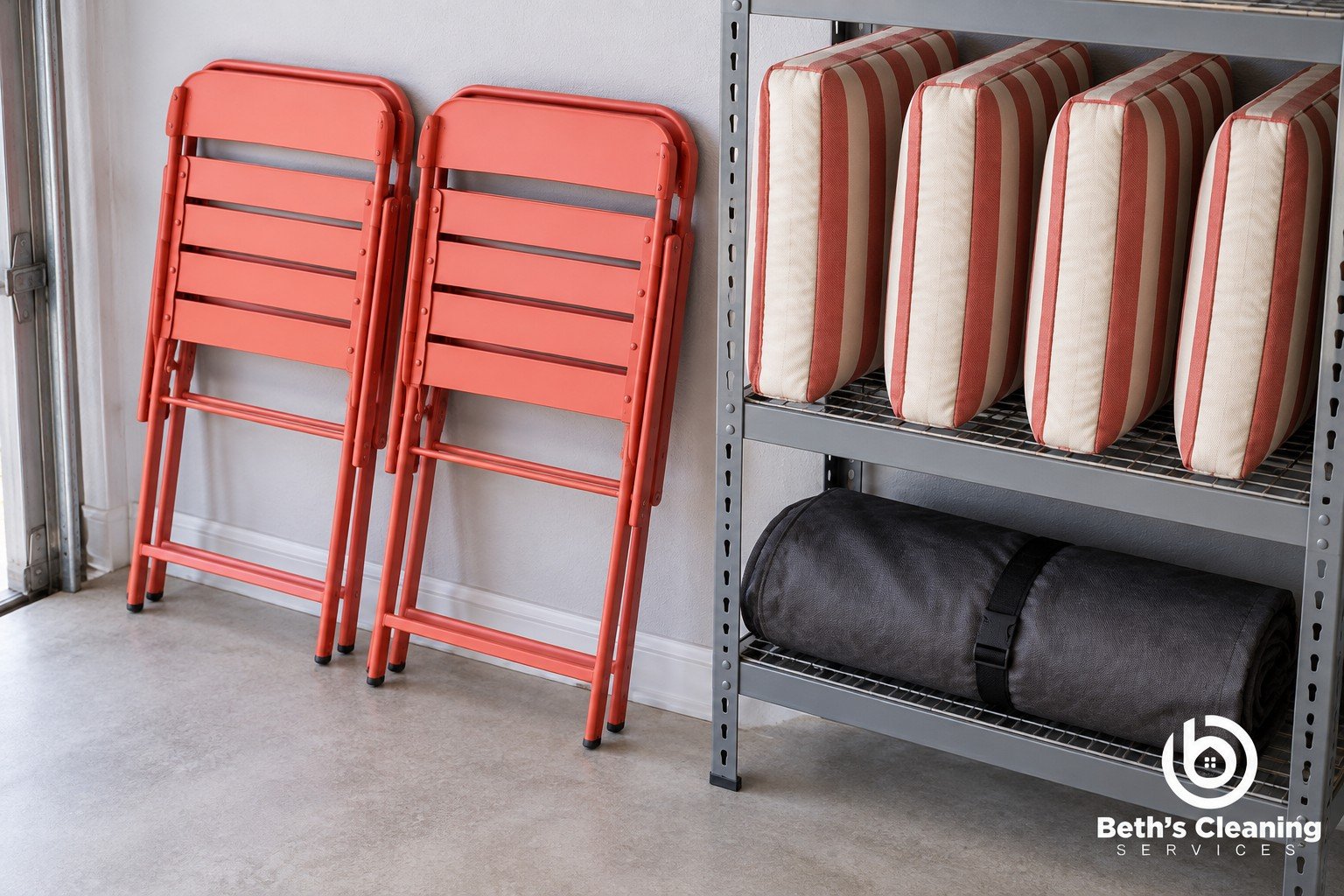
Fold or stack pieces only if they are designed for it, and protect finishes from rubbing. Keep furniture stable, leave access to doors, and avoid piling heavy frames on cushions. Label bags of removable hardware and keep them with the matching piece. Clean and dry furniture covers before putting them away too.
Some frames can remain outdoors, while others need shelter. POLYWOOD’s winterizing guide, for example, says its frames can stay outside year-round. That does not establish winter suitability for a different brand, a cushion, or a glass tabletop. Use the maker’s storage guidance and a properly fitted cover where recommended; check covered pieces periodically for trapped moisture.
Keep a short spring-ready checklist
Before finishing, note any loose hardware, damaged finish, or fabric repairs that still need attention. Store the care instructions with your checklist. Cleaning can remove seasonal grime, but it cannot repair a cracked frame or make unsuitable furniture weatherproof.
For indoor upkeep while you tackle seasonal projects, explore Beth’s Cleaning Services’ regular home cleaning. Confirm the scope when booking; outdoor furniture care and storage should be discussed separately.

Follow us for more cleaning tips and inspiration!
📸 @beths_services on Instagram | 👍 BethCleaningServices on Facebook