Before you prepare your fireplace for the first fire of fall, separate household cleaning from chimney inspection and appliance service. A tidy hearth does not show whether a flue is clear or a gas appliance is operating correctly. Start with the manual and service history, then handle only the routine tasks intended for the homeowner.
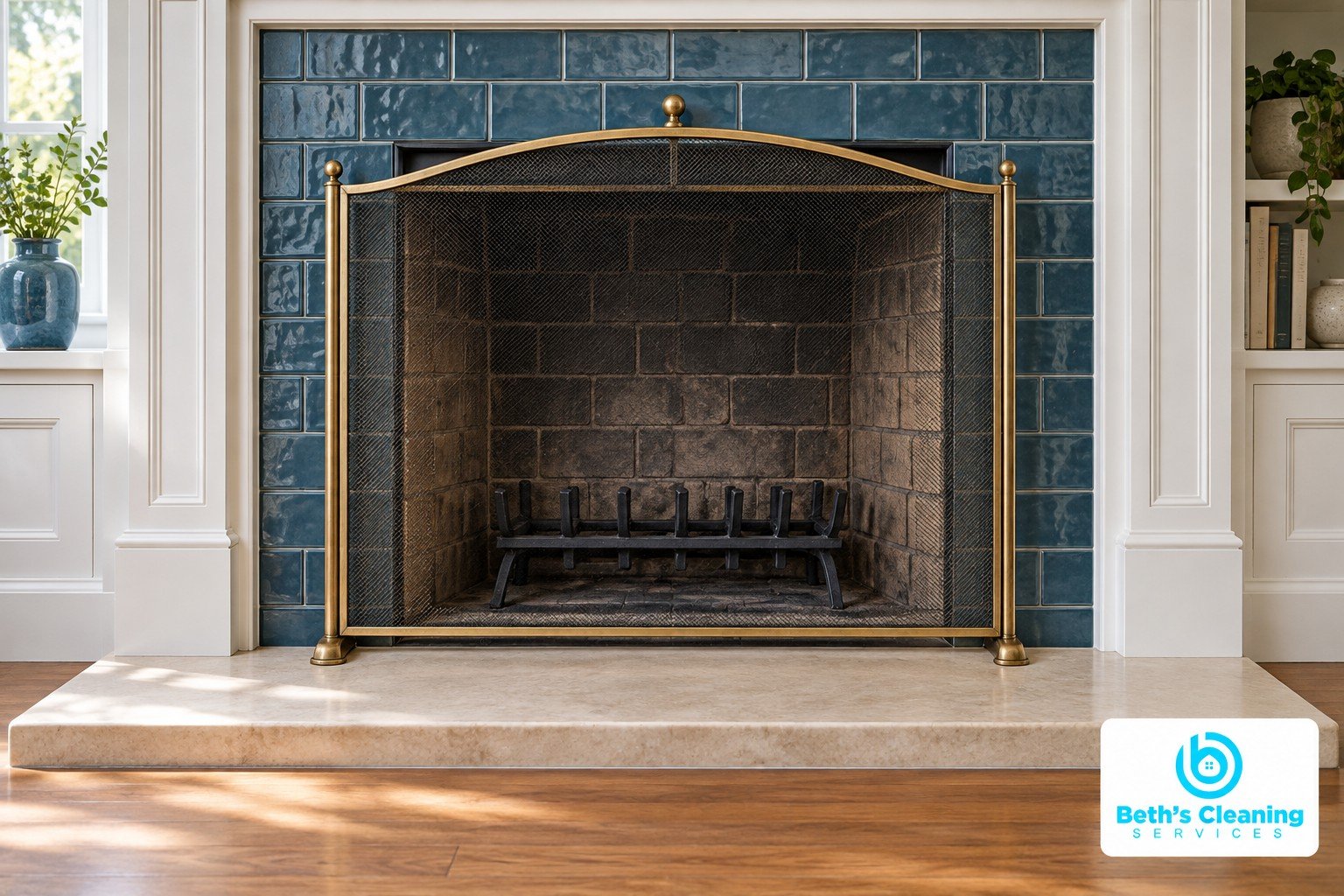
Arrange inspection before the first fire
The U.S. Fire Administration’s fireplace guidance calls for professional chimney inspection and cleaning each year. Schedule that work before using a wood-burning fireplace after its seasonal break. Tell the professional about smoke entering the room, water leaks, unusual odors, or any previous chimney fire.
A flashlight view from the hearth cannot rule out hidden damage or an obstruction farther up the chimney. Do not climb onto the roof, reach into the flue, or try to judge readiness by a visible soot measurement alone. If you do not know when the system was last inspected, arrange an assessment rather than lighting a trial fire.
Identify the appliance and its owner-care tasks
Find the model information and the correct manual. Open masonry fireplaces, wood inserts, gas fireplaces, and gas log sets have different operating and maintenance requirements. Do not apply a wood-fireplace ash-cleaning routine to a gas unit or rearrange its ceramic logs, burner media, or connections.
For gas appliances, use the manufacturer’s service schedule and a qualified technician for burner, ignition, venting, and gas-connection work. Heat & Glo’s owner-care resources link to model manuals and glass-cleaning information. Use the instructions for your exact unit; a general cleaning article cannot establish which panels are safe for you to remove.
Handle old wood ash carefully
Allow the fireplace and ashes to cool completely before the owner-permitted cleanup. Embers can remain hidden in ash, so do not assume that yesterday’s fire is cold. Use suitable tools to transfer ash gently, avoiding a cloud of fine dust. Keep ordinary household vacuums away from fireplace ash.
USFA advises placing ashes in a lidded metal container outside, at least 10 feet from the home. Keep the container away from other buildings and combustible materials, on a noncombustible surface. Do not put ash into a plastic bin, cardboard box, or indoor trash can. Follow local disposal guidance once it is fully cold.
Clean the hearth, surround, and approved glass
With the appliance off and cold, dust accessible exterior surfaces and clean the hearth with a product suitable for its stone, tile, or other finish. Avoid spreading soot onto nearby upholstery. Leave firebox liners, refractory panels, seals, and internal components to the care method specified in the manual; vigorous scrubbing is not appropriate for every material.
For glass, use only the cleaner and access procedure approved by the fireplace manufacturer, and never clean hot glass. Do not substitute ordinary window spray or abrasive pads without checking compatibility. If glass is cracked, a seal is damaged, or a required barrier is missing, stop and arrange service before use.
Prepare your fireplace area and review operation
Move combustible furnishings and decorations at least 3 feet from the fireplace, following USFA heating-safety guidance, and respect any larger clearance in the appliance instructions. Keep the hearth clear. Check smoke and carbon monoxide alarms according to their instructions before heating season.
For a wood-burning unit, review the manual’s damper, screen, and door positions before lighting. Do not force a stuck damper or use burning paper as a homemade draft test. Have uncertain airflow or smoke problems evaluated. Gas appliances may have different venting arrangements; do not adjust them using wood-fireplace advice.
Use only the fuel specified for the appliance. For firewood, the EPA’s archived Burn Wise guidance recommends dry, seasoned wood with moisture below 20 percent and excludes wet or green wood. Avoid painted or treated wood, trash, and liquid accelerants. Follow the manufacturer’s lighting procedure and attend the fire throughout use.
Know when to stop
If smoke spills into the room, stop using the fireplace and seek professional assessment rather than repeatedly relighting it. If a carbon monoxide alarm sounds, leave the home and call emergency services from outside. If you smell gas, leave without operating switches or attempting ignition, then contact the gas utility or emergency services from a safe location.
Keep the inspection record and any repair recommendations with the manual. For routine cleaning of the surrounding rooms, explore Beth’s Cleaning Services’ regular home cleaning. Chimney sweeping, fireplace inspection, and gas-appliance service require a qualified specialist and should not be assumed to be part of a house-cleaning appointment.
Follow us for more cleaning tips and inspiration!
📸 @beths_services on Instagram | 👍 BethCleaningServices on Facebook