
Clean window screens before seasonal storage so dust and insect debris do not stay packed in the mesh all winter. The right method depends on the screen: conventional removable panels, fine-mesh products, and retractable systems can have different care instructions. Identify yours before reaching for a hose.
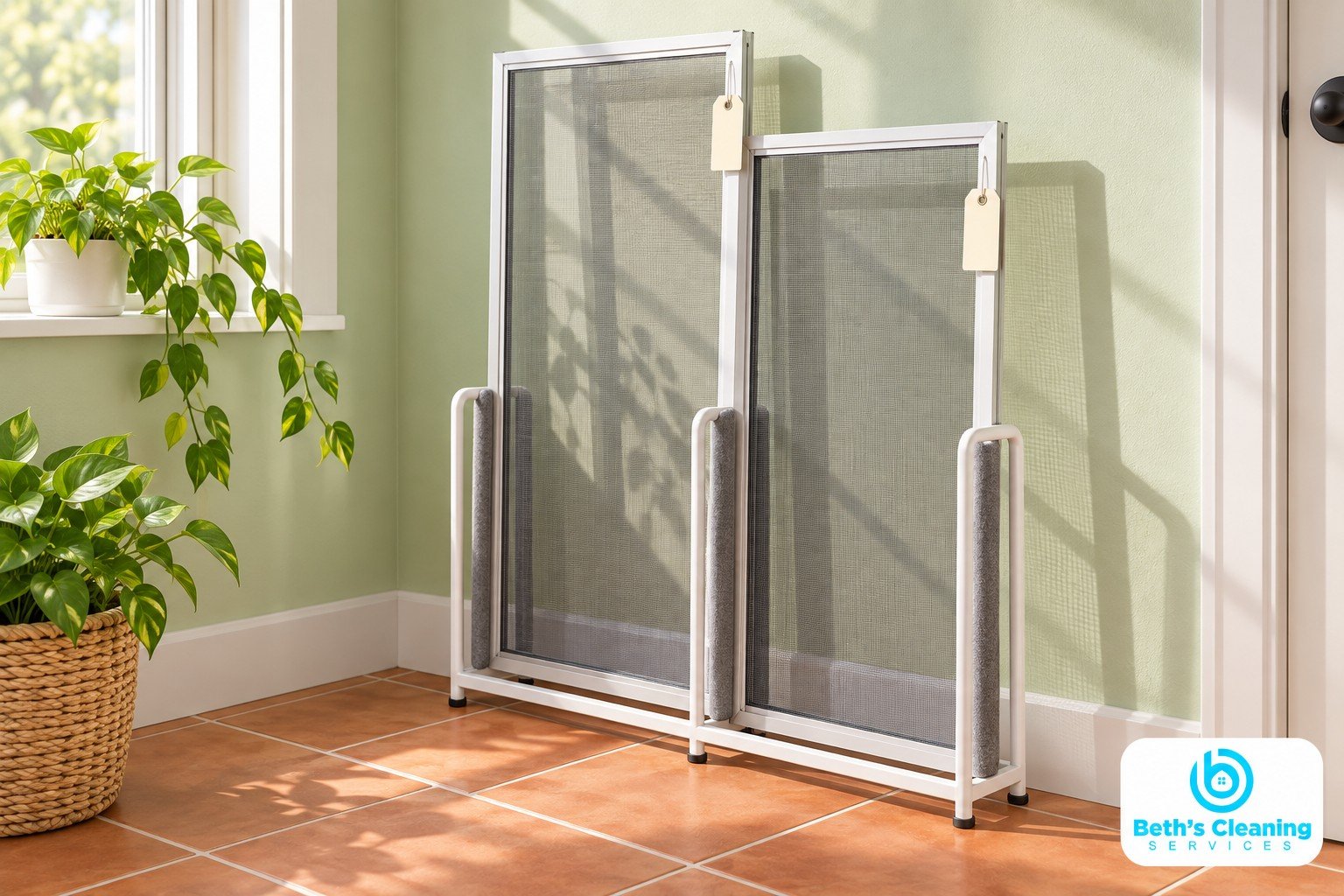
Check the Screen Type and Removal Instructions
Look for the window brand, model, and screen care guide. This routine is for removable insect screens that the manufacturer allows you to wash. Do not dismantle a retractable housing or force a fixed screen out of its track. Specialty mesh may need a different approach: Renewal by Andersen’s screen guide, for example, specifies dry dusting for its TruScene screens. Use the instructions for your exact product if general advice differs.
Work from a safe indoor position or ground level. Do not lean out of a window or reach across an opening to release a clip. Keep children and pets away from open windows; insect screens are not fall protection. If removal requires difficult exterior access, arrange help from a qualified window service professional.
Label and Inspect Each Panel
Before removal, photograph the panel’s orientation and label its room and window location. Put a removable tag on the frame, away from the mesh and moving hardware. Follow the release sequence in the guide while supporting the frame with both hands. Never lift a screen by its mesh or pull against a stuck latch.
Check for torn mesh, a loose retaining spline, bent frame edges, and broken tabs. Set damaged panels aside and note the problem before storing them. Cleaning cannot straighten a badly bent frame or restore tension to damaged mesh. Ask the supplier about a compatible repair or replacement instead of applying a universal patch.
Remove Loose Dust Gently
Choose a clean, padded work surface that supports the frame without pressing on the mesh. Use a soft brush or the dry-cleaning tool approved for your screen. If its guide permits a vacuum brush, use gentle suction and light contact; stop if the mesh pulls toward the nozzle. Skip sticky lint rollers and stiff brushes unless the manufacturer specifically allows them.
Wash Approved Screens With Mild Soapy Water
For washable panels, prepare mild soapy water as directed by the manufacturer. Andersen’s mesh and frame cleaning instructions call for a soft-bristle brush, mild soapy water, a thorough clean-water rinse, and drying the frame with a soft cloth. Keep pressure light and support the panel while turning it to reach the other side.
Use a gentle rinse where washing is approved. Do not use a pressure washer or a concentrated jet. Avoid bleach mixtures, solvents, and abrasive pads unless expressly specified for that product. If dirt remains, repeat the approved gentle method rather than pushing harder. Stop if the mesh starts to sag or separate from its frame.
Dry Fully Before You Store Them
Wipe water from washable frames and let the panels air-dry in a secure, supported position. Check lower corners and channels for retained water. Drying time varies with weather and airflow, so use the condition of the panel rather than a fixed number of minutes. Do not put damp screens into a sealed bag or crowded stack.
While the screens are out, remove loose debris from accessible window tracks using the window maker’s care instructions. Keep drainage openings clear. Avoid spraying water into the window assembly or applying lubricant to unfamiliar hardware.
Support the Frames in a Dry Storage Area
A dry, ventilated space away from foot traffic works better than a damp corner behind heavy boxes. Andersen’s storage guidance allows flat or upright storage when the panels are properly supported and protected from bending. Keep weight off both mesh and frames, and make sure nearby objects cannot fall onto them.
Use dividers or a suitable rack that supports the frame edges without squeezing them. Keep the location labels visible and store any removable hardware in a labeled container. Before spring reinstallation, inspect the panels again and check that all retaining hardware seats correctly.
Do All Screens Need Winter Storage?
No. Seasonal removal depends on the window design and how you use it. Retractable systems may remain installed, and conventional screens do not all share the same winter-care requirements. Follow the product guide. Cleaning removes surface debris; it is not a guarantee of improved indoor air quality or allergy relief.
For help with household cleaning inside your Peabody-area home, explore Beth’s Cleaning Services’ regular cleaning service and confirm the tasks included. Ask separately about window-related work rather than assuming screen removal, repairs, or exterior access are part of a visit.

Follow us for more cleaning tips and inspiration!
📸 @beths_services on Instagram | 👍 BethCleaningServices on Facebook