
A coat closet works best when you can find a jacket, a matching pair of gloves, and the shoes you need without moving a pile first. Before cold-weather gear takes over, empty the space, clean the surfaces, and give everyday items a practical home. Leave enough room for coats to hang freely rather than filling every inch.
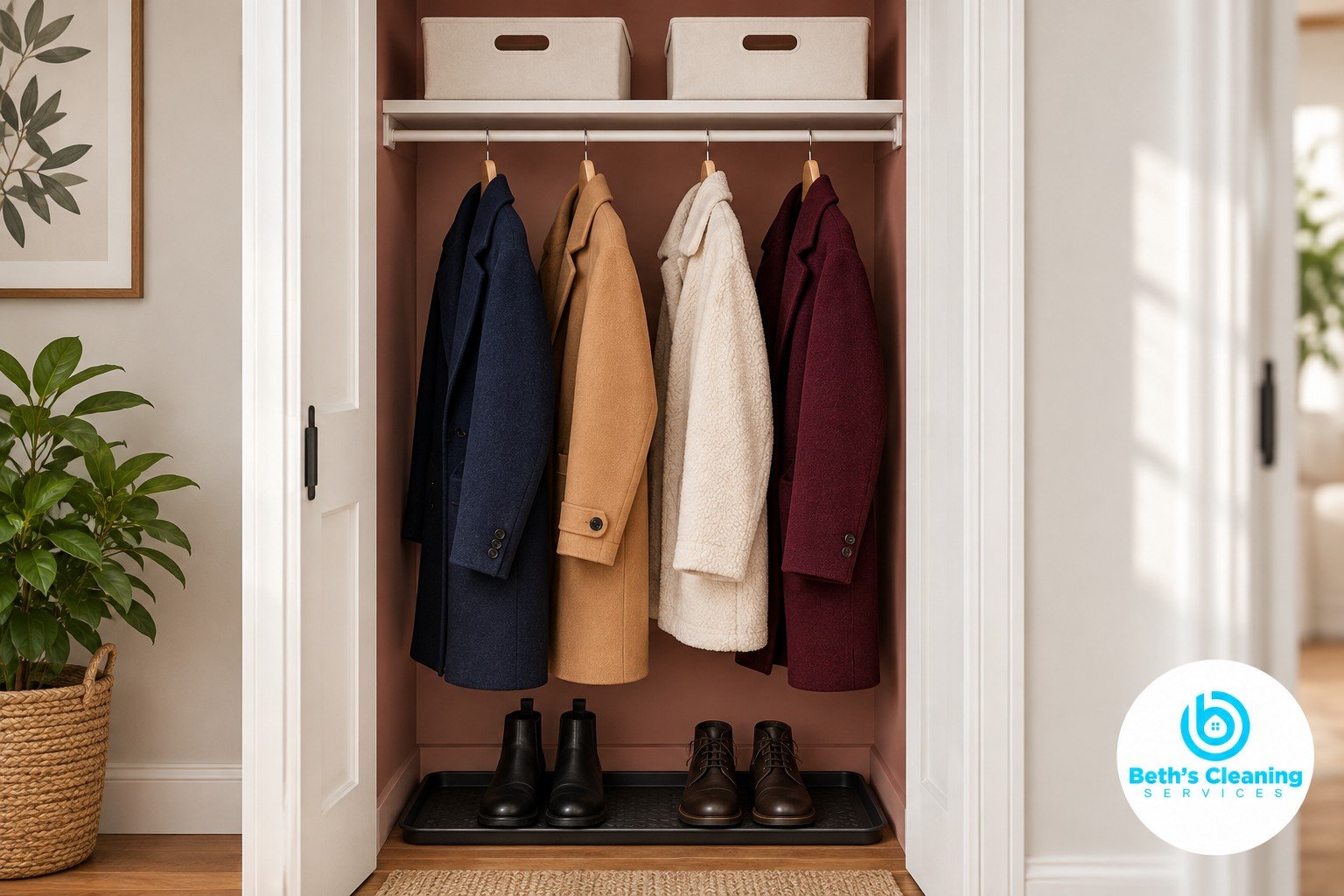
Sort Before Buying Organizers
Set out four groups: keep here, store elsewhere, clean or repair, and donate. Empty coat pockets and match gloves before deciding what stays. Check sizes and broken zippers now, while there is time to repair or replace items. Ask household members before donating their belongings, and check the receiving organization’s condition requirements.
Keep the current season’s frequently used gear near the front. Move occasional-use items elsewhere if space is limited. Measure shelf depth, rail clearance, and the door swing before buying bins or an over-door organizer. Test the layout with containers you already own; a large bin is not helpful if it blocks the coats below it.
Clean the Coat Closet From Top to Bottom
Remove loose dust from the top shelf, rail, corners, and baseboards with a suitable vacuum attachment or soft cloth. Finish with the floor and threshold. Work gently around painted surfaces and exposed fasteners, and use a stable step stool for reachable high areas rather than standing on a shelf or chair.
Choose a cleaner approved for each surface instead of spraying one all-purpose product everywhere. Painted walls, finished wood, laminate shelves, and flooring may need different care. Test a hidden spot, apply product to a cloth when appropriate, and avoid soaking shelf edges or seams. Let cleaned surfaces dry before putting fabric bins and clothing back.
Look for loose shelf brackets, a sagging rail, water marks, and damaged flooring while the space is empty. Reduce the load and arrange repairs where needed. New hooks or shelves should be installed with the correct hardware and within their rated capacity; adhesive hooks are not automatically suitable for heavy winter coats.
Give Wet Gear a Separate Drying Place
Do not pack damp coats, umbrellas, or gloves into a closed closet. Dry them according to their care labels in a suitable ventilated area first. For washed wool knitwear, Woolmark recommends flat drying unless the care label permits tumble drying. Avoid draping wool over a radiator, where concentrated heat can damage it.
A removable boot tray catches drips and grit, but it still needs attention. Empty collected water, clean the tray as directed, and dry both the tray and the floor beneath it. Choose a tray compatible with your flooring and keep it out of the walking path. Let wet footwear dry before returning it to tight storage.
Organize by Person and Frequency of Use
Hang structured coats on sturdy hangers that support their shoulders. Follow garment instructions for items that should be folded instead. Arrange everyday coats at an easy-to-reach height and reserve a little space for a guest jacket. Avoid forcing bulky sleeves between tightly packed garments.
Give each person a small open bin or pocket for dry hats and gloves. Label it in a way that is easy to recognize; picture labels can help younger children. Keep pairs together and put rarely used accessories on a higher shelf only if you can retrieve them safely. Place heavy items lower rather than above head height.
Investigate a Musty Smell
Start by checking for damp fabric, trapped water under the tray, condensation, or a leak. A fragrance or moisture-absorbing tub does not repair an ongoing water problem. The EPA’s moisture guide emphasizes controlling moisture and keeping indoor humidity below 60%, ideally 30–50% where possible. A humidity meter can help you assess the room rather than guessing.
If the smell persists or you find water damage or suspected mold, investigate the cause before returning belongings. Get appropriate help for recurring or extensive problems. Do not treat a routine closet wipe-down as mold remediation, and follow the safety directions on any moisture-control product you use.
Keep the Reset Easy to Maintain
Once a week, return stray items to their places, check the boot tray, and remove grit from the floor. At the next seasonal change, review what was actually worn before moving everything back. If the door is difficult to close or finding a coat requires unloading the rail, reduce the contents instead of adding another organizer.
For help with household cleaning in the Peabody area, explore Beth’s Cleaning Services’ regular cleaning service and confirm the included tasks. Sort personal belongings beforehand and discuss access to empty closet surfaces; donation handling, installations, and specialty garment care should be arranged separately.

Follow us for more cleaning tips and inspiration!
📸 @beths_services on Instagram | 👍 BethCleaningServices on Facebook