How to Effectively Clean and Disinfect After Illness
Someone in your home got sick. You did everything right — kept them comfortable, managed the symptoms, waited it out. But the moment they start feeling better, a new problem begins: the germs they left behind. On surfaces, in the air, on bedding, and on every high-touch object they came into contact with. Without proper disinfection, those germs linger — and the rest of the household pays the price.
Cleaning and Disinfecting Are Not the Same Thing
This distinction matters enormously after illness. Cleaning removes visible dirt and debris from surfaces. Disinfecting kills the pathogens that cause infection. One does not automatically accomplish the other.
The correct order is always cleaning first, then disinfecting. Disinfectants work far less effectively on surfaces covered in dirt or grease. Clean the surface, then apply the disinfectant and allow it to dwell for the time specified on the label — usually one to three minutes. Wiping immediately defeats the purpose entirely.
Start With High-Touch Surfaces
Germs don’t spread evenly. They concentrate on the surfaces sick people touch most frequently. These are the priority targets in any post-illness disinfection:
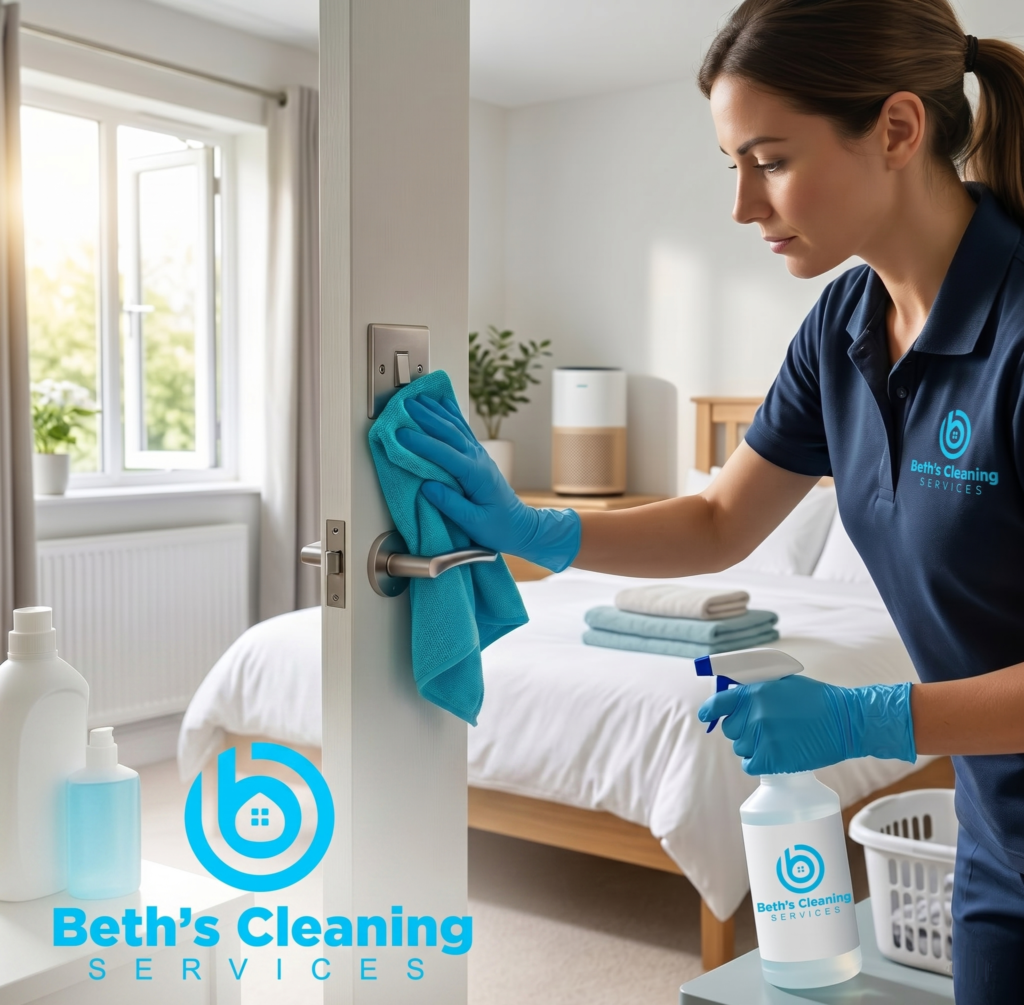
- Door handles and light switches throughout the entire home
- TV remotes, phones, tablets, and keyboards
- Bathroom faucets, toilet handles, and flush levers
- Stair railings and cabinet pulls
- The sick person’s bedside table and lamp
Disinfect these surfaces twice — once when the person is still sick and again after recovery. The second pass catches anything reintroduced during the final stages of illness.
The Bedroom Requires Special Attention
The room where the sick person rested carries the highest pathogen load in the home. Treat it differently from every other room.
What to address immediately after recovery:
- Strip all bedding and wash in the hottest water the fabric allows
- Disinfect the mattress surface with an appropriate spray and allow it to dry completely
- Wash or disinfect all pillows — including decorative ones that were handled
- Wipe down every surface in the room including walls near the bed if the illness involved coughing or sneezing
- Ventilate the room thoroughly — open windows for at least 30 minutes
The CDC recommends laundering all sick room linens separately from the rest of the household’s laundry to prevent cross-contamination.
Bathrooms Need a Full Disinfection Protocol
Shared bathrooms are the fastest route for illness to spread to healthy household members. After someone has been sick, a standard bathroom clean is not sufficient.
Full post-illness bathroom protocol:
- Disinfect the entire toilet — seat, lid, handle, tank, and base
- Replace the toothbrush of anyone who was ill immediately
- Disinfect all faucet handles, soap dispensers, and towel bars
- Wash all towels and bath mats on a hot cycle
- Disinfect the inside of the sink and drain area
Do not share towels during or after illness — even briefly. Cross-contamination through towels is more common than most people realize.
Kitchen Disinfection After Illness
If the sick person spent time in the kitchen — even briefly — certain areas need attention beyond regular cleaning:
- Disinfect all countertops and the kitchen table thoroughly
- Wash all dishes used by the sick person in hot water or run them through a full dishwasher cycle
- Disinfect the refrigerator handle, microwave handle, and any other appliance they touched regularly
- Replace the kitchen sponge immediately — sponges harbor bacteria and viruses longer than almost any other household object
Air Quality Matters Too
Respiratory illnesses spread through airborne droplets that settle on surfaces and linger in enclosed spaces. Ventilation is one of the most underutilized tools in post-illness cleanup.
Two steps that make a meaningful difference:
- Open windows throughout the home for at least 30 minutes after the sick person has recovered
- Run a HEPA air purifier in the rooms where the sick person spent the most time
Fresh air circulation dramatically reduces the concentration of airborne pathogens that surface cleaning cannot address.
When Professional Disinfection Makes Sense
For households with young children, elderly members, or immunocompromised individuals, standard DIY disinfection after serious illness carries real risk. A professional cleaning team uses hospital-grade disinfectants, follows systematic protocols, and covers areas that home cleaning routinely misses.
At Beth’s Cleaning Service, our deep disinfection service gives households the thorough, professional-grade clean that protects everyone under your roof — especially those most vulnerable.
👉 Visit bethcleaning.com to schedule your disinfection clean today.
📍 Serving Beverly, Peabody, Salem, Danvers, Swampscott & Lynn, MA