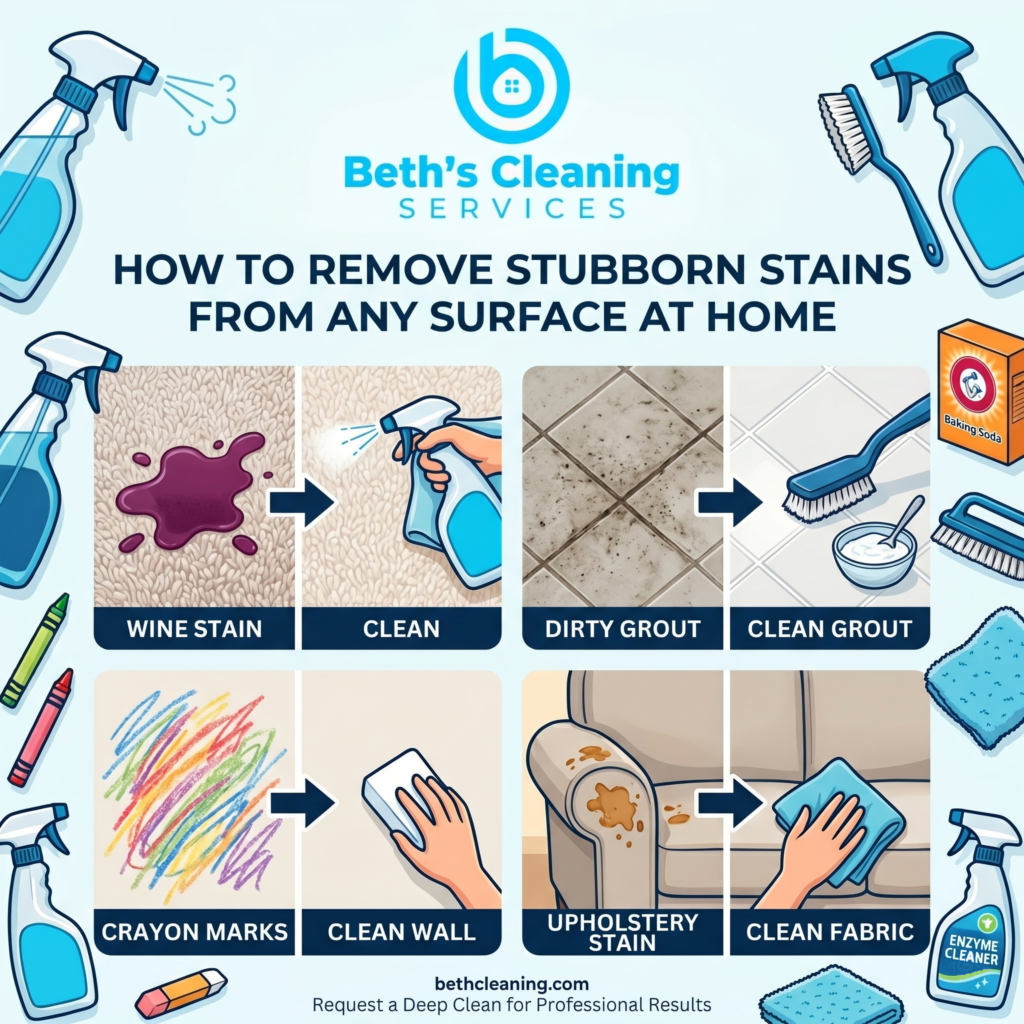
Every home has that one stain. The wine spill on the carpet that happened months ago. The grease mark on the wall that won’t respond to anything. The mystery discoloration on the grout that appeared slowly and never left. Most people assume these stains are permanent. Most of the time they aren’t — they just require the right approach.
The Rule That Saves Every Stain Situation
Speed is the single most important factor in stain removal. A fresh stain that gets immediate attention is almost always fully removable. The same stain left for hours — or days — bonds to the surface at a molecular level and becomes exponentially harder to treat.
The universal first response to any fresh stain: blot, never rub. Rubbing spreads the stain laterally and drives it deeper into the material. Blotting lifts it out. Use a clean white cloth and work from the outside edge of the stain inward to prevent spreading.
Carpet Stains: The Most Common Battlefield
Carpet stains intimidate people because the fibers seem to hold everything permanently. They don’t — but they require the right sequence.
For most common stains — food, drink, mud — this process works reliably:
- Blot up as much of the stain as possible immediately
- Mix one tablespoon of dish soap with two cups of cold water
- Apply the solution with a clean cloth and blot repeatedly
- Rinse with cold water and blot dry
- Never use hot water — it sets protein-based stains like blood and dairy permanently
For red wine specifically, club soda applied immediately before blotting is remarkably effective. For pet stains, an enzymatic cleaner is essential — standard cleaners mask the odor without breaking down the proteins that cause it.
Hard Floor Stains Require Surface-Specific Treatment
Different hard floor materials respond differently to stain treatment. Using the wrong product causes damage that creates a bigger problem than the original stain.
Hardwood floors are vulnerable to moisture. Never saturate them. For dark stains, a small amount of white vinegar on a damp cloth applied briefly — then dried immediately — lifts most marks without damaging the finish.
Tile floors tolerate stronger cleaners but the grout is porous and absorbs stains deeply. A baking soda paste applied directly to stained grout, left for ten minutes, and scrubbed with a stiff brush restores most discoloration. For severe staining, an oxygen-based cleaner produces better results than bleach without the risk of damaging colored grout.
Natural stone — marble, granite, travertine — is highly sensitive to acidic cleaners. Never use vinegar, lemon juice, or standard bathroom cleaners on stone surfaces. A pH-neutral stone cleaner is the only safe option.
Wall Stains: Scuffs, Marks, and Grease
Walls take constant abuse and most people ignore the marks until they become too obvious to overlook. The treatment depends entirely on the type of mark.
For scuff marks from shoes or furniture, a clean pencil eraser removes them from painted walls with no product required. For crayon marks, a small amount of white toothpaste applied and rubbed gently lifts the wax without damaging the paint. For grease marks — common near the stove and around light switches — a drop of dish soap on a damp cloth cuts through the oil effectively.
The key with painted walls is always to use the least abrasive method first. Aggressive scrubbing damages the paint finish and creates a bigger visual problem than the original mark.
Fabric and Upholstery Stains
Sofas, chairs, and fabric headboards absorb stains quickly and hold them stubbornly. The challenge is that over-wetting fabric causes water rings that are as visible as the original stain.
The professional approach for upholstery:
- Check the cleaning code on the furniture tag — W means water-based cleaners are safe, S means solvent only, X means vacuuming only
- Apply cleaner sparingly to a cloth first, never directly to the fabric
- Blot repeatedly rather than scrubbing
- Use a fan or hair dryer on a cool setting to dry the area quickly and prevent water rings
For set-in stains on upholstery, the Carpet and Rug Institute recommends enzyme-based cleaners as the most effective option for organic stains including food, drink, and pet accidents.
The Stains That Need Professional Treatment
Some stains exceed what home treatment can resolve. Deep-set carpet stains that have been treated incorrectly and set further, large upholstery stains, grout discoloration across an entire bathroom, and water damage marks on hardwood all require professional equipment and products to restore properly.
Attempting aggressive DIY treatment on these surfaces frequently causes permanent damage. Knowing when to stop and call a professional is itself the right decision.
At Beth’s Cleaning Service, our deep cleaning service handles the stains and surface restoration that standard cleaning can’t solve — safely, effectively, and without risk to your surfaces or materials.
👉 Visit bethcleaning.com to book your deep clean today.
📍 Serving Beverly, Peabody, Salem, Danvers, Swampscott & Lynn, MA