How to Tackle Spring Cleaning Without the Overwhelm
Every year it’s the same story. The weather turns, the motivation hits, and you decide this is the weekend you finally deep clean the entire house. By Sunday afternoon you’re exhausted, half the rooms are unfinished, and the motivation that felt so strong Friday night has completely evaporated. Spring cleaning doesn’t have to work this way. Here’s a smarter approach.
Why Spring Cleaning Feels So Overwhelming
The problem isn’t the cleaning itself. It’s the scope. Spring cleaning means different things to different people — and without a clear plan, it expands to fill every available hour without ever feeling finished.
The fix is simple: define exactly what spring cleaning means in your home before you start. Write it down. A specific list of tasks is a project with an end. A vague intention to “deep clean everything” is a project that never ends.
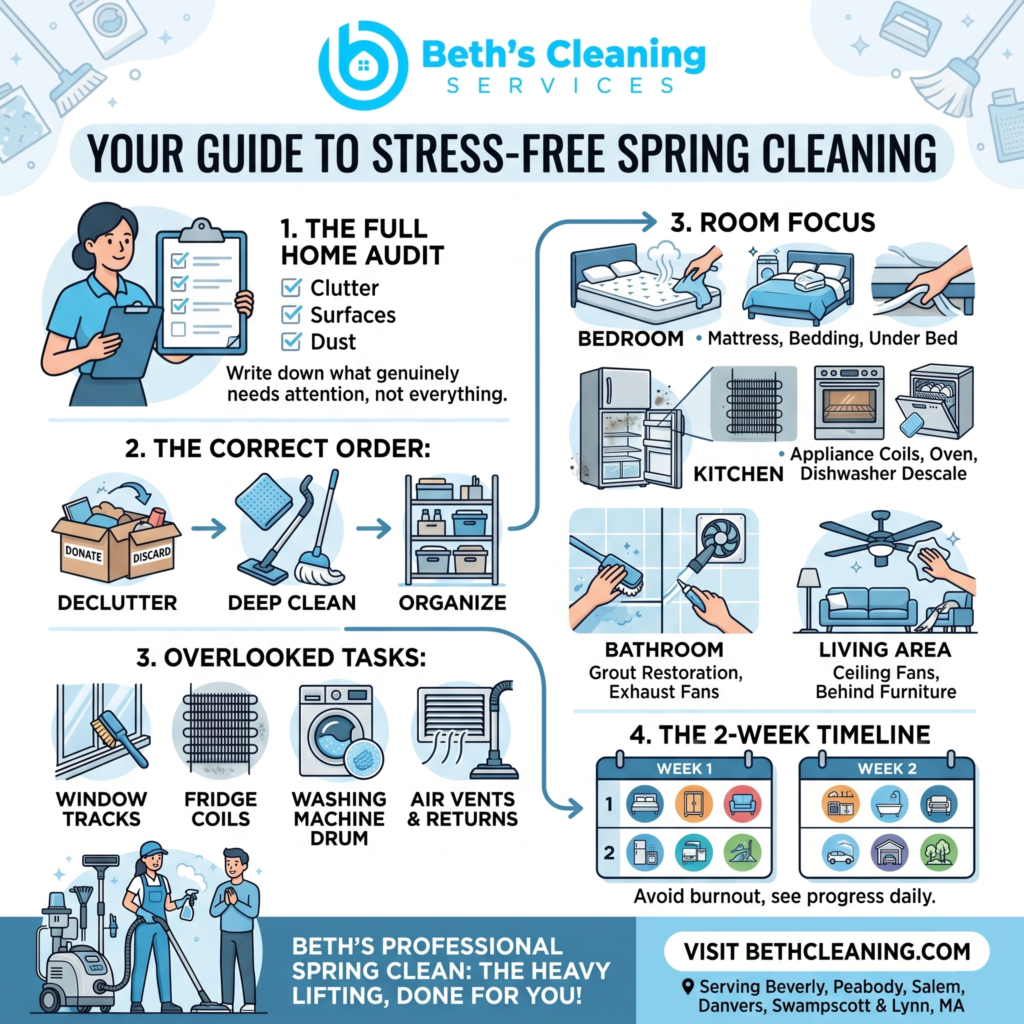
Start With a Full Home Audit
Before touching a single cleaning product, walk through every room with a notepad. Write down what actually needs attention — not what theoretically should be done, but what genuinely needs it in your specific home right now.
Look for:
- Accumulated clutter that never found a permanent home
- Surfaces that haven’t been properly cleaned since last year
- Areas where dust, mold, or grime has built up visibly
- Items that need to be donated, discarded, or relocated
This audit takes twenty minutes and eliminates hours of unfocused cleaning. You work from a list, not from anxiety.
The Right Order Makes Everything Faster
Spring cleaning done in the wrong order creates redundant work. The correct sequence is always declutter first, deep clean second, organize third.
Cleaning around clutter is inefficient and incomplete. Organizing before cleaning means moving everything twice. Declutter the space, clean every surface thoroughly, then organize what remains. Every time, in every room, in that exact order.
Room by Room: Where to Focus Your Energy
Not every room needs the same level of attention. Allocate your time based on where buildup actually occurs.
Bedrooms accumulate dust, allergens, and clutter more than visible grime. Focus on mattress cleaning, washing all bedding including pillows and duvet covers, vacuuming under the bed, and clearing out closets ruthlessly.
Kitchen is where grease and grime build up in places daily cleaning never reaches. Pull appliances away from the wall, clean behind and underneath them, degrease the inside of the oven completely, and descale the dishwasher with a specialized cleaner.
Bathrooms need grout restoration, re-caulking around tubs and showers where discoloration has set in, and a thorough cleaning of exhaust fans which accumulate dust quietly all year.
Living areas collect dust in places nobody looks — ceiling fan blades, behind furniture, inside light fixtures, and along baseboards. These surfaces are harmless individually but collectively represent months of accumulated allergens.
The Tasks Most People Skip Every Year
These spring cleaning tasks get postponed year after year — and they matter more than most people realize:
- Window tracks and frames — collect dead insects, mold, and debris that standard window cleaning never touches
- Refrigerator coils — dusty coils make the appliance work harder and increase energy bills significantly
- Washing machine drum — run an empty hot cycle with a machine cleaner to eliminate mold and odor buildup
- Air vents and returns — remove covers and vacuum inside to stop the system from recirculating a full year of accumulated dust
- Garage floor — oil stains and debris that accumulated over winter clean up far more easily in spring before summer heat sets them permanently
Spread It Across Two Weeks
The biggest spring cleaning mistake is trying to finish everything in a single weekend. Two weeks of focused daily sessions — one room or one category per day — produces a better result with a fraction of the physical and mental cost.
A realistic two-week structure:
- Week one — bedrooms, closets, and living areas
- Week two — kitchen, bathrooms, garage, and outdoor spaces
Each day has a clear target. Progress is visible. Burnout never arrives because no single session is overwhelming.
The American Cleaning Institute recommends this distributed approach as the most effective way to complete a thorough spring clean without exhaustion.
The Areas That Always Need Professional Attention
Some spring cleaning tasks genuinely exceed what DIY effort can accomplish effectively. Carpet deep cleaning, upholstery restoration, post-winter exterior cleaning, and thorough grout restoration require professional equipment and products to do properly.
A professional spring clean handles these tasks efficiently and to a standard that resets your home completely — giving your daily and weekly routines a powerful fresh baseline to maintain all year.
At Beth’s Cleaning Service, our deep cleaning service is built for exactly this moment. We tackle the heavy work so you can focus on the lighter tasks — and finish spring cleaning feeling accomplished rather than defeated.
👉 Visit bethcleaning.com to book your spring deep clean today.
📍 Serving Beverly, Peabody, Salem, Danvers, Swampscott & Lynn, MA