
Before you wash throw blankets for cooler weather, read each care label and separate pieces by material, color, and cleaning method. A cotton throw, wool blanket, faux-fur cover, and electric blanket can look equally cozy while requiring very different care.
Use this guide to plan the wash, protect texture and shape, and avoid turning one laundry session into shrinkage, dye transfer, or damaged trim.
Start With the Label and Construction
The American Cleaning Institute’s laundry basics recommends sorting by color, fabric type, and washing instructions before treating stains and selecting detergent. Check both the fiber content and the care symbols. “Dry clean only,” “hand wash,” and “do not tumble dry” are instructions, not suggestions.
Inspect seams, fringe, zippers, loose yarns, removable covers, and decorative attachments. Repair an open seam before washing. Close zippers, but do not put a filled cushion insert in the machine unless its own label permits it. For heated throws, follow the manufacturer’s exact cleaning instructions and inspect cords and controls first.
Check Whether the Blanket Fits the Washer
A blanket needs room to move and rinse. Do not force a bulky item into the drum or wrap it tightly around an agitator. Check the washer manual for capacity and bulky-item guidance. If the blanket cannot move freely, use a suitably sized machine or the cleaning method on its label.
Wash compatible items together rather than adding towels simply to fill the load. Towels can contribute lint and friction. Separate dark and light colors, especially for the first wash, and keep pieces with hooks or rough fasteners away from delicate knits.
How to Wash Throw Blankets Safely
1. Treat stains according to the fabric. Blot fresh spills and use a stain product approved for that textile. Test it on a hidden area and follow its contact time. Avoid rubbing delicate pile or wool, which can distort the surface.
2. Measure detergent. Choose a product allowed by the care label and use the amount on its package for the load and water conditions. More detergent does not guarantee a cleaner blanket and may be harder to rinse from a bulky textile.
3. Select the labeled cycle and temperature. Machine-wash only when the label permits it. “Gentle” is not automatically safe for every throw, and cold water is not a substitute for a hand-wash or professional-cleaning instruction.
4. Skip unapproved additives. Vinegar is often promoted as a universal natural softener, but it is not part of every blanket maker’s care method and should not be combined casually with laundry products. Use softener, bleach, sanitizer, or a booster only when both the textile label and product instructions allow it.
Dry Without Stretching or Heat Damage
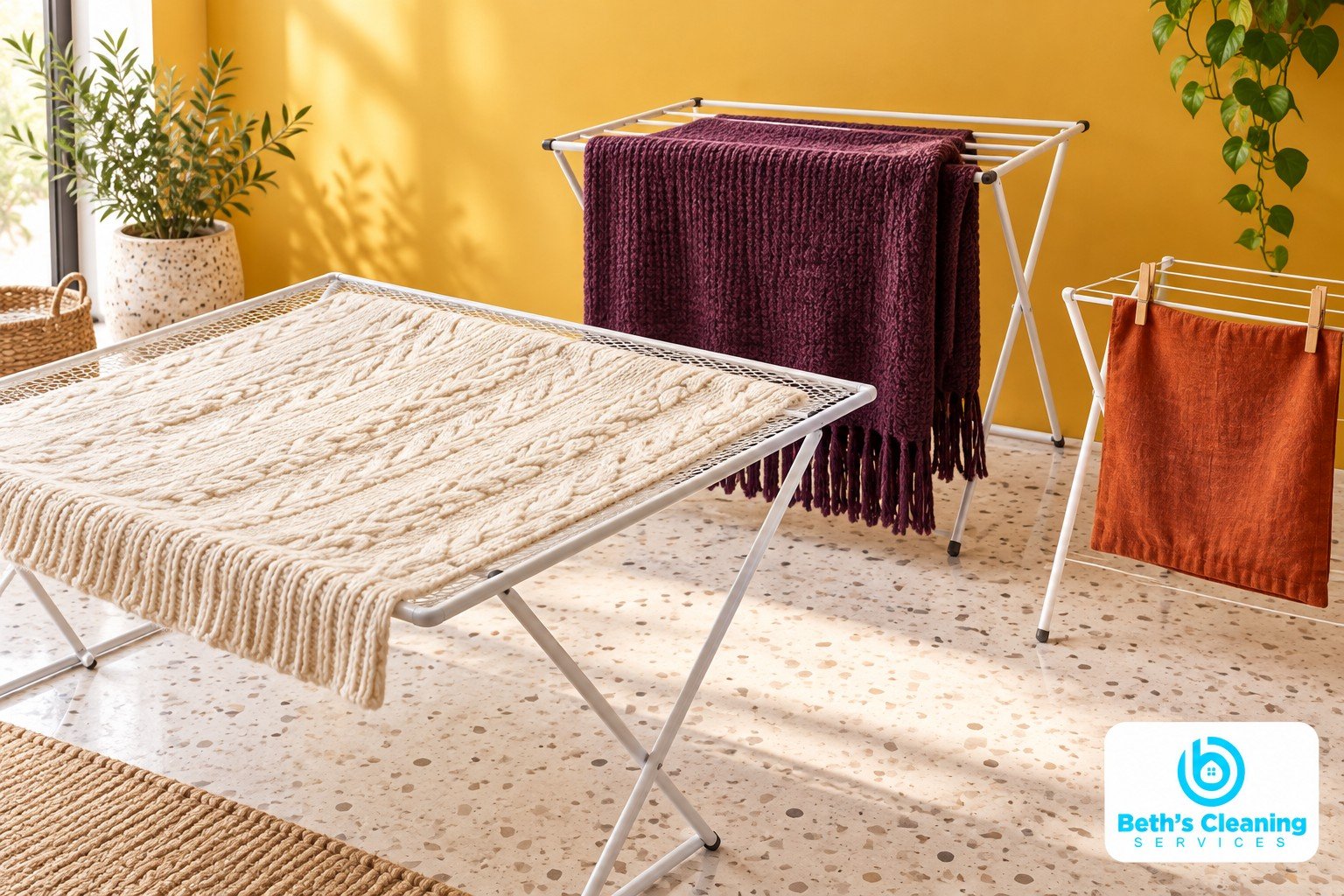
Read the drying symbols before moving the blanket. Support the weight of a wet knit instead of letting it hang from one edge. Reshape it gently to its original dimensions and dry as directed, with enough airflow for both sides.
For wool, the Woolmark blanket-care guide says to follow the sewn-in instructions, use a wool cycle and specified wool detergent only when machine washing is allowed, and support the wet blanket while drying. Its general guidance avoids tumble drying wool blankets unless the product’s care claim specifically allows it.
Tumble-dry only at the setting named on the label. High heat can shrink fibers, alter faux fur, and damage elastic or bonded finishes. Pause a bulky load to check for damp folds, and do not store or return a cover to the sofa until it is completely dry.
Freshen Between Washes
There is no universal two-to-four-week schedule for every throw. Wash when the label and actual use call for it: visible soil, a spill, persistent odor, pet use, or illness may change the timing. Woolmark notes that wool blankets often benefit from airing and may need washing only sparingly.
Vacuum the surrounding upholstery with the appropriate attachment and remove crumbs before replacing clean textiles. Air washable items as their labels permit. Use a fabric shaver only if the manufacturer allows it, keep the blade flat, and stop near embroidery, fringe, loose loops, or very thin fabric.
Store Only Clean, Fully Dry Textiles
Fold without compressing delicate pile and store in a clean, dry place. Follow any maker instructions for breathable or sealed storage rather than assuming one method suits every fiber. Do not add fragrance products directly to the textile unless the label allows them.
For help cleaning the room around your throws and cushions, explore Beth’s Cleaning Services’ regular cleaning and confirm the tasks included in your visit. Laundry, stain treatment, and specialty textile care should be discussed rather than assumed.

Follow us for more cleaning tips and inspiration!
📸 @beths_services on Instagram | 👍 BethCleaningServices on Facebook